
5 Crisis Data Points Recovery Centers Must Track
When managing crises, recovery centers rely on data to make informed decisions and improve outcomes. Tracking the right metrics ensures resources are used effectively and underserved communities are supported. Here's a quick summary of what to monitor:
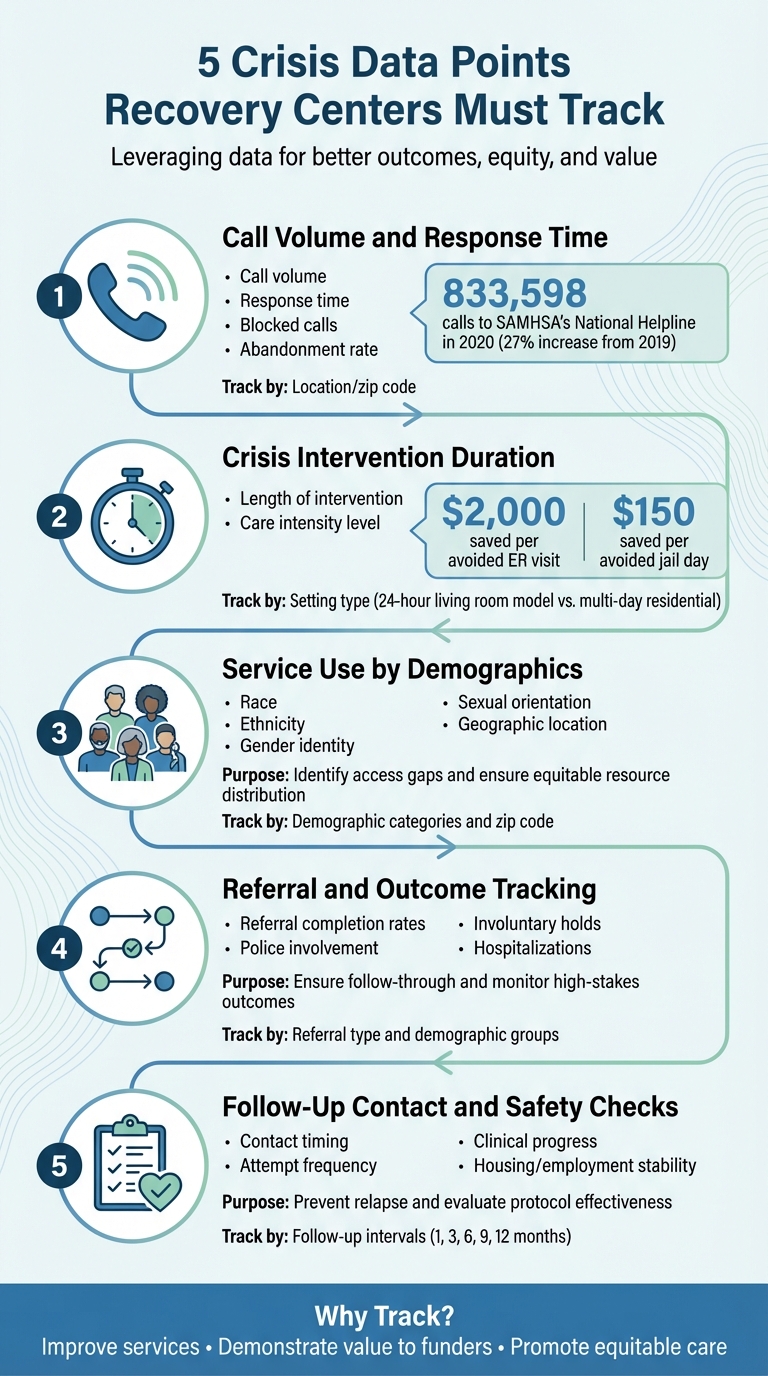
- Call Volume and Response Time: Measure demand, response efficiency, and service bottlenecks. Track metrics like blocked calls and response times by location.
- Crisis Intervention Duration: Understand how long support lasts to evaluate care levels, staffing needs, and cost savings.
- Service Use by Demographics: Identify gaps in access and ensure fair resource distribution by collecting demographic and geographic data.
- Referral and Outcome Tracking: Monitor referrals to ensure follow-through and analyze high-stakes outcomes like police involvement and hospitalization.
- Follow-Up Contact and Safety Checks: Track post-crisis support, including timing, contact attempts, and client progress, to improve protocols and prevent relapse.
These metrics help recovery centers improve services, demonstrate value to funders, and promote equitable care. Using structured data systems simplifies tracking and ensures transparency.
5 Essential Crisis Data Points Recovery Centers Must Track
1. Call Volume and Response Time
Understanding call volume and response time is essential for managing crises effectively. These metrics offer a clear picture of how well resources are meeting demand and pinpoint areas where improvements are needed.
Call volume measures the number of help requests, while response time shows how quickly those requests are addressed. Together, they highlight whether staffing levels are sufficient and where bottlenecks might be causing delays. For instance, consider this: in 2020, SAMHSA's National Helpline fielded 833,598 calls - a sharp 27% increase compared to 2019. Without tracking these numbers, it becomes difficult for centers to justify hiring more staff or upgrading their systems.
Additionally, monitoring the percentage of calls blocked (when callers encounter busy signals) and the call abandonment rate (when callers hang up before speaking to someone) helps identify capacity issues. These figures directly reflect whether the system can handle demand during critical moments.
Tracking response times by zip code adds another layer of insight. This data reveals which neighborhoods are experiencing delays, helping ensure resources are distributed equitably.
"Enterprise-level decision-making requires precision and foresight. Metrics change subjective debates into objective, actionable insights." - Aksheeta Tyagi, Content Marketer, Sprinklr
High call volumes can overwhelm systems and exhaust staff. By keeping an eye on metrics like Average Speed of Answer (ASA) and Average Handle Time (AHT), organizations can identify when their teams are stretched too thin. During peak hours, AI-powered assistants can step in to handle overflow, ensuring people get timely support when they need it most.
These metrics turn everyday operational challenges into clear, actionable data, enabling smarter decisions and better outcomes.
sbb-itb-ce23a48
2. Crisis Intervention Duration
Understanding how long crisis interventions last sheds light on the level of support individuals need. It's not just about counting hours - tracking these durations helps uncover patterns that inform staffing decisions and evaluate the effectiveness of different approaches.
The length of interventions often depends on the intensity of care required. For example, lower-acuity settings, like "living room" models, typically resolve cases within 24 hours. In contrast, crisis residential programs might extend support over several days or even weeks. Urgent care clinics within the crisis system play a crucial role by offering same-day services like assessments, counseling, and medication management. These clinics help prevent situations from escalating into longer, more resource-intensive interventions. By documenting these timelines, centers can distinguish between individuals who need immediate stabilization and those requiring extended care. Just like tracking call volumes, monitoring intervention durations is a key part of building a thorough crisis tracking system.
The financial benefits of this tracking are hard to ignore. Avoiding a single emergency room visit saves approximately $2,000, and preventing one day in jail saves about $150. When centers link intervention durations to outcomes, they can identify which timeframes are most effective for stabilization. For instance, data might reveal whether 23-hour observation periods lead to better results compared to shorter interventions, guiding decisions on how to allocate resources.
Beyond cost savings, tracking how long interventions last also supports staff well-being. Analyzing time spent on cases, combined with staff feedback, can highlight moments when compassion fatigue sets in. This insight helps determine when adjustments to protocols or supervision are necessary. Additionally, major funders like HUD and SAMHSA now require programs to provide measurable data - such as length of stay - to prove their cost-effectiveness and ability to promote long-term stability. Without accurate tracking, centers may struggle to demonstrate their impact and secure ongoing funding.
3. Service Use by Demographics
Understanding how different groups access recovery center services is crucial to ensuring help reaches everyone who needs it. This isn't just about counting heads - it’s about identifying which communities might face obstacles and whether resources are being shared fairly.
The data on service usage often uncovers gaps that hint at deeper issues, such as barriers to care or inequities in access. These numbers spark essential questions: Are they a true reflection of need, or do they highlight flaws in outreach or accessibility? Without consistently tracking demographic information, recovery centers risk overlooking these disparities. This kind of data doesn’t just show who is receiving help - it also pinpoints areas where outreach efforts could make a real difference.
Programs like STAR and San Francisco's Street Crisis Response Team underscore how important it is to systematically gather this information.
Adding geographic data into the mix makes demographic insights even more powerful. For example, tracking service use by zip code can uncover location-specific challenges, such as transportation issues or limited nearby resources. This kind of information can guide decisions about where to place mobile units or set up additional locations, making services more accessible to those who need them most.
Collecting sensitive demographic information, however, requires care. Using a trauma-informed approach to standardize intake procedures is key. Tools like Recovery Center CRM can simplify this process with customizable forms that ensure demographic data is collected consistently and flag incomplete entries for follow-up.
4. Referral and Outcome Tracking
Tracking referrals isn’t just about connecting clients to external services - it’s about ensuring they actually receive the help they need and benefit from it.
To do this, it’s essential to monitor referral data at every step. This includes everything from suggesting a service to arranging transportation, completing the handoff, and confirming the client’s successful connection to care. For instance, San Francisco's Street Crisis Response Team evaluates each outcome - such as linkage to care, police involvement, and involuntary holds - to address disparities across race, ethnicity, gender identity, and sexual orientation.
Centers also need to keep a close eye on high-stakes outcomes. This includes involuntary mental health holds, emergency transports, and situations requiring police involvement. As the Vera Institute of Justice emphasizes:
"Metrics on the presence of police at crisis incidents - whether dispatched by call operators or requested by the response team - and the use of involuntary hospitalization are especially crucial for transparency with community members".
By measuring these outcomes in detail, organizations can continuously improve their services using direct client feedback.
Post-crisis feedback is particularly valuable for refining outreach efforts. In 2022, a partnership between Portland Street Response and Street Roots uncovered gaps in awareness between white individuals and people of color, leading to targeted adjustments in outreach strategies. Similarly, Healing Transitions’ Rapid Responder Program uses daily reports from Wake County EMS to identify and prioritize follow-ups for the most urgent cases.
Tools like Recovery Center CRM can simplify referral tracking. This platform automates follow-ups based on the severity of the crisis and flags incomplete referrals. Its customizable fields allow centers to categorize referrals - whether for mental health, housing, or substance use - and track completion rates across different demographics, helping to quickly address disparities.
5. Follow-Up Contact and Safety Checks
The work doesn’t stop after the immediate response to a crisis. Keeping track of follow-up contacts and conducting regular safety checks is crucial for recovery centers. These steps not only ensure individuals continue to receive the support they need but also help evaluate whether current protocols are effective.
Timing Is Key. Beyond making referrals, the timing of follow-ups can make all the difference. Monitoring when follow-ups occur, how many attempts are made, and how often contact is successfully established can reveal the best times for intervention and help identify early warning signs. As the Vera Institute of Justice puts it:
"Collecting and using data is critical to understand what's working well and how programs can improve and adapt throughout the process of implementation".
What to Monitor During Follow-Ups. During safety checks, it’s essential to track specific data points. These include clinical progress (like sobriety duration and adherence to treatment plans), mental health indicators (such as mood and therapy participation), and overall life stability (like housing and employment status). For programs that prioritize housing stability, HUD requires centers to document household income sources, non-cash benefits, health insurance coverage, and chronic health conditions.
Using Demographics to Identify Gaps. The true value of follow-up data emerges when it’s broken down by demographic groups. For instance, San Francisco's Street Crisis Response Team analyzed outcomes such as care connections, police involvement, and involuntary psychiatric holds (5150s) to evaluate whether their program was addressing disparities across race, ethnicity, gender identity, and sexual orientation. This kind of analysis helps refine strategies to make them more effective and equitable.
One common obstacle is incomplete data collection, which can skew evaluations of equity. To address this, using trauma-informed practices during demographic data collection is essential. Conducting post-crisis interviews, after individuals have had time to process their experiences, often leads to more accurate and meaningful feedback.
Streamlining this process is easier with tools like Recovery Center CRM, which centralizes follow-up data and creates a continuous feedback loop to improve crisis response protocols.
Building a Data Tracking System
Creating a reliable data tracking system is key to turning crisis data into meaningful insights for recovery centers.
Start with Structured Data
The foundation of an effective system lies in structured data - think text fields, dropdown menus, and numeric entries that make information searchable and allow for auto-generated reports. While tools like voice memos have their place, structured data is much better for identifying trends and generating reports without the hassle of manual review. This approach forms the groundwork for tracking broader outcomes effectively.
Redefine Success Beyond Sobriety
Success in recovery isn't just about staying sober. It's equally important to track factors like employment, stable housing, social connections, and overall quality of life.
Automate Follow-Up Processes
Manual follow-ups can be incredibly time-consuming, often requiring 10–15 attempts per data point. Automating these workflows ensures no one slips through the cracks. Tools like Recovery Center CRM make this easier by scheduling and sending reminders automatically. As highlighted by Healing Transitions' Rapid Responder Program:
"The ability to generate reports allows for informed decision-making, continuously improving policies and procedures. The system organizes and prioritizes follow-up attempts, ensuring those with the highest need receive the most attention".
Monitor Progress Over Time
Recovery is a journey, not a destination. Tracking progress at regular intervals - such as 1, 3, 6, 9, and 12 months after discharge - helps identify risks of relapse early on. This kind of long-term monitoring acknowledges the ongoing nature of recovery and provides opportunities to offer support when it's most needed.
Ensure Equity Across Demographics
An effective tracking system should also assess whether outcomes are fair and consistent across different groups. Collecting demographic data - such as race, ethnicity, and gender - can reveal service gaps. Using trauma-informed methods to gather this information can help reduce incomplete or missing entries.
Conclusion
Keeping track of call volume, response times, intervention duration, demographics, and follow-ups isn’t just about crunching numbers - it’s about establishing trust and accountability with funders, accreditation bodies, and the community. Transparent data helps avoid oversimplified conclusions about how well a program is working.
Equity plays a central role in this process. For example, in April 2022, Portland Street Response (PSR) uncovered a significant gap: white community members were far more aware of their crisis program than people of color. By analyzing data and conducting interviews led by evaluator Greg Townley, along with surveys by Street Roots, PSR was able to develop targeted outreach efforts to address this disparity. Similarly, San Francisco's Street Crisis Response Team evaluates outcomes like care linkage, police involvement, and 5150 involuntary holds through a lens of equity - measuring their effectiveness in reducing disparities across race, ethnicity, gender identity, and sexual orientation. This kind of intentional data use turns numbers into a force for meaningful change.
But data collection must be thorough. Denver's STAR program, for instance, faced challenges early on, recording race and ethnicity as "unknown" for over 30% of clients during its first six months. Investing in structured, trauma-informed data systems - such as platforms like Recovery Center CRM - can lead to better decision-making, improving both immediate crisis response and long-term recovery outcomes.
Quantitative metrics alone don’t tell the whole story. Combining numbers with insights from clients, families, and staff interviews paints a fuller picture of a program’s impact. A well-organized data system turns raw statistics into actionable strategies, paving the way for lasting improvements.
FAQs
How does tracking demographic data help recovery centers allocate resources effectively?
Tracking demographic details - like age, gender, ethnicity, housing status, and insurance coverage - gives recovery centers a better picture of the communities they serve. This information is key to identifying groups that may be overlooked and anticipating the need for specialized services, such as youth-oriented initiatives or language-specific support programs.
By examining patterns in the data, recovery centers can fine-tune their resources to address the needs of their clients. For example, if there’s an uptick in clients experiencing homelessness or a growing number of non-English speakers, centers can respond by providing resources like naloxone kits, transportation assistance, or hiring staff with the right language skills and cultural knowledge. This not only improves how services are delivered but also strengthens grant proposals by showcasing a fair and thoughtful allocation of resources.
Platforms like Recovery Center CRM make this process easier by transforming raw data into practical insights. These tools allow centers to better manage staffing, inventory, and outreach efforts, ultimately leading to better outcomes for the people they serve.
How does technology simplify follow-up processes during a crisis?
Technology has become a game-changer in managing follow-up tasks during a crisis, especially when it comes to automating labor-intensive processes. Tools like Recovery Center CRM simplify operations by centralizing client records, organizing follow-up schedules, sending automated reminders, and keeping track of interactions. This not only cuts down on manual data entry but also ensures consistent communication, allowing staff to dedicate more time to hands-on support.
On top of that, tech-powered analytics offer real-time insights, identifying individuals who might require additional attention. Automated systems help reduce mistakes, speed up reporting, and maintain accurate records, all while meeting data collection standards. By streamlining these tasks, recovery centers can provide more efficient and coordinated care when it's needed most.
Why is it essential to track how long interventions last for cost efficiency and staff well-being?
Tracking how long interventions take is crucial for managing finances and supporting employee well-being. By keeping an eye on the time spent on each activity, recovery centers can pinpoint inefficiencies, such as tasks that drag on too long or get duplicated. These inefficiencies not only drive up costs but also drain valuable resources. Addressing them ensures budgets are managed wisely and resources are put to better use.
On top of that, knowing the duration of interventions helps managers balance workloads, cut down on overtime, and prevent staff burnout. This approach promotes a healthier work environment while ensuring clients continue to receive top-quality care. Tools like Recovery Center CRM make it easier to gather and analyze this data, leading to smarter decisions that benefit both budgets and staff morale.