
Custom Templates for Impact Reporting in Recovery
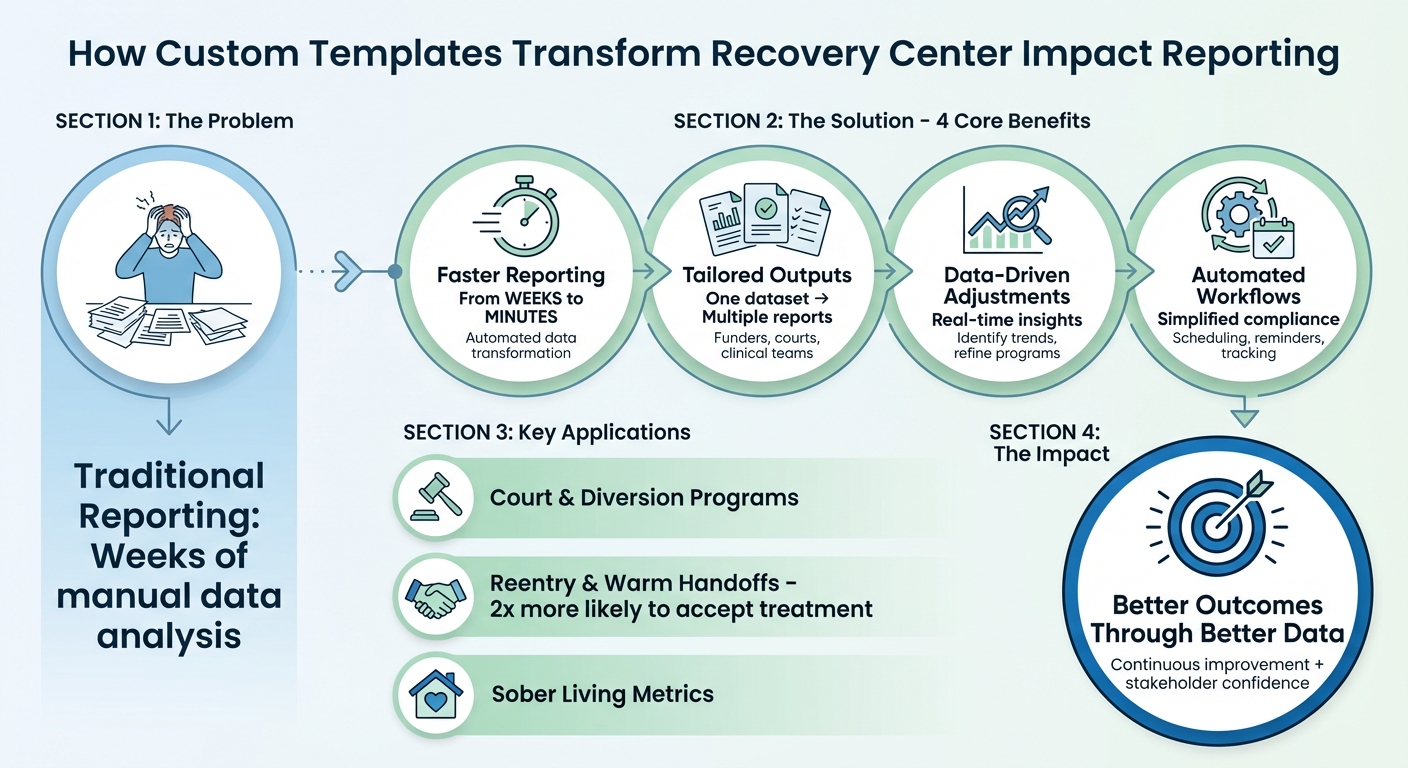
Recovery centers often struggle with inefficient, manual reporting processes. Custom templates for impact reporting streamline this by transforming raw data into clear, actionable insights. These templates save time, improve data accuracy, and cater to different stakeholder needs - whether funders, clinicians, or accreditation bodies. Here's what they offer:
- Faster Reporting: Reduce analysis time from weeks to minutes.
- Tailored Outputs: Create reports for funders, courts, or internal teams without duplicating efforts.
- Data-Driven Adjustments: Identify trends (e.g., peer support effectiveness) to refine programs in real time.
- Automated Workflows: Simplify scheduling, reminders, and compliance tracking.
How Custom Templates Transform Recovery Center Impact Reporting
Benefits of Custom Templates in Recovery Programs
Custom templates are changing the way recovery centers manage their data. They provide structured frameworks that ensure accurate and consistent information collection, making data more actionable and accessible for everyone involved. This approach streamlines processes, supports tailored reporting, and drives improvements based on data insights.
Streamlined Data Collection
With standardized intake forms and centralized systems, recovery centers can ensure that client data is collected uniformly and comprehensively across all locations. For example, when a client begins treatment, custom templates guide counselors to document key details like demographics, referral sources, treatment history, and risk factors - all in a consistent format. This eliminates the need for staff to sift through file cabinets or navigate multiple databases to piece together a client’s history.
The Substance Abuse and Mental Health Services Administration (SAMHSA) acknowledged the importance of this approach in February 2024, updating its Data Reporting Templates for Behavioral Health Clinic Quality Measures to support Certified Community Behavioral Health Clinic (CCBHC) models.
Automated workflows built into these templates add another layer of efficiency. For instance, if the template requires weekly check-ins during the first month after discharge, the system can automatically send reminders to both staff and clients. This reduces missed appointments and minimizes manual scheduling errors.
Better Stakeholder Reporting
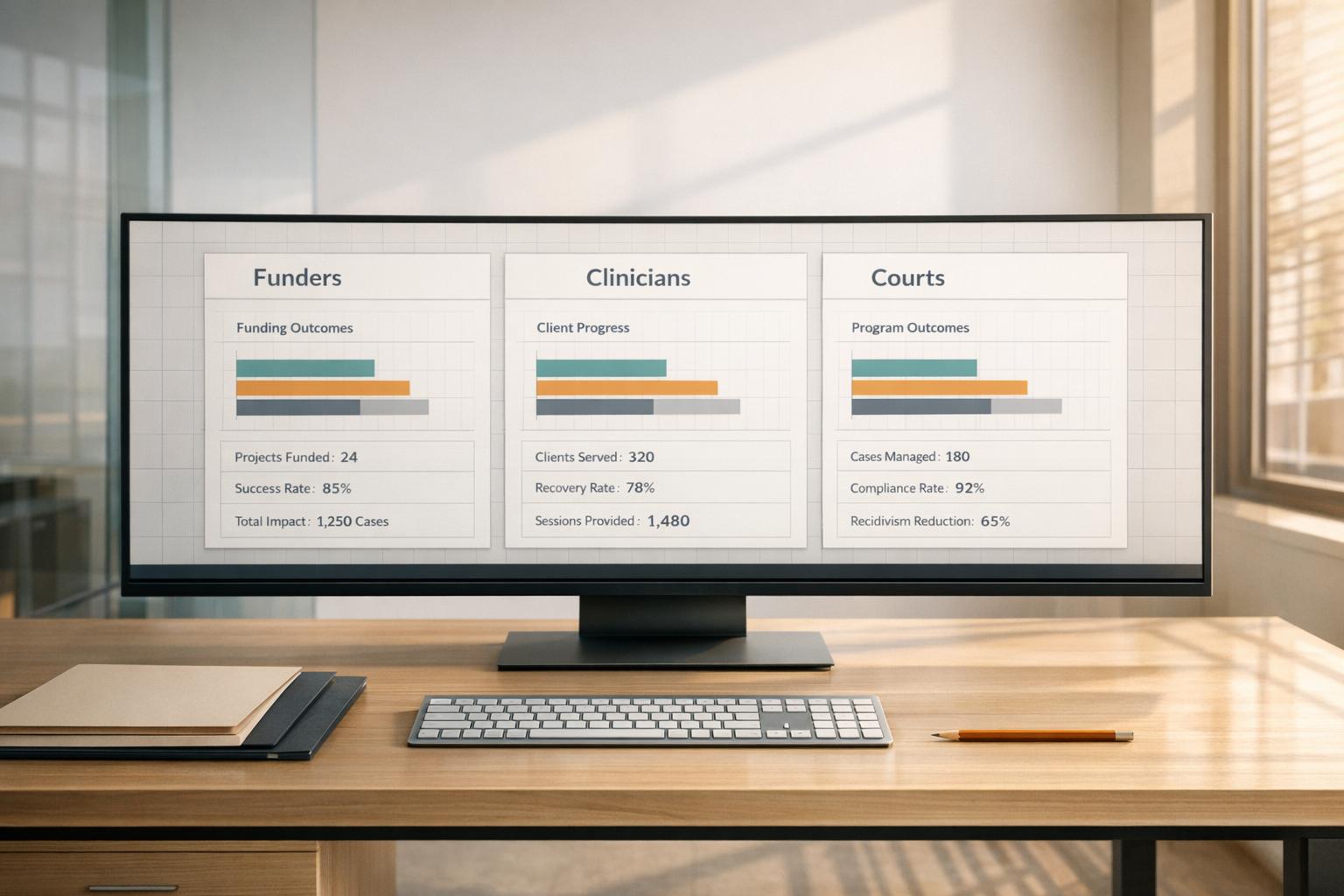
Once consistent data collection is in place, custom templates make it easier to meet the unique reporting needs of different stakeholders. Each audience requires specific information:
- Funders are interested in measurable outcomes like completion rates, employment improvements, and cost savings.
- Accreditation bodies focus on compliance with quality and safety standards.
- Internal medical staff need detailed clinical data to refine treatment plans.
Custom templates simplify this by enabling tailored reporting formats from the same dataset. For instance, a recovery center can generate a funder report showcasing metrics like housing stability, employment status, and sobriety duration, while also creating an internal report for clinicians that highlights intervention outcomes and service gaps. Tools like Addiction Recovery Center and Treatment Center Case Management and CRM make it possible to produce these flexible reports without duplicating data entry efforts.
Program Insights and Adjustments
Custom templates don’t just organize data - they help uncover patterns that lead to better decision-making. By consistently recording details like client triggers, intervention methods, and outcomes, recovery teams can identify what works best for specific groups.
For example, data might reveal that clients who join peer support groups within their first week of treatment have a 40% higher completion rate than those who delay participation. Or it could highlight transportation challenges faced by a particular demographic, signaling a need for shuttle services or telehealth options. These insights allow teams to make timely, evidence-based adjustments during monthly or quarterly reviews, rather than waiting for annual evaluations.
Templates also support early intervention. By tracking attendance patterns, mental health scores, and engagement levels, centers can flag clients who may be at risk of relapse. This enables proactive responses before issues escalate, ensuring that recovery efforts remain effective and client-focused. This structured approach leads to impactful, real-time recovery outcomes.
Use Cases for Custom Templates in Recovery Center CRM
Custom templates play a key role in improving documentation and operational efficiency across recovery programs. Addiction Recovery Center and Treatment Center Case Management and CRM offers templates that simplify processes for judicial programs, reentry services, and housing operations. These tailored tools ensure data is clear, organized, and actionable, helping recovery services achieve better outcomes.
Court and Diversion Program Reporting
Court-ordered treatment programs require precise documentation, and custom templates make this process much easier. Recovery centers can track program compliance with fields that monitor essential metrics like treatment attendance, medication usage, and drug-free days. This data is vital for judicial reviews and ensures accurate, centralized records for court reporting. Profiles include everything from court-ordered referrals to demographic details and logs of client interactions.
Automated workflows enhance efficiency by prioritizing follow-ups. For instance, when daily reports from EMS or judicial referrals are received, the CRM system organizes these cases by urgency, ensuring that individuals in critical need are addressed first. Visual tools like progress charts and score trackers provide courts with a clear picture of a client’s recovery journey, making compliance reviews more straightforward and enabling real-time reporting on program impact.
Reentry and Warm Handoff Tracking
Transitions from institutional care to community support are critical moments in recovery, and custom templates help manage these shifts effectively. Reentry programs benefit from templates that track every step of this process. A "warm handoff", as defined by the White House Office of National Drug Control Policy, goes beyond simple referrals - it involves compassionate, hands-on guidance to connect individuals with appropriate care.
Research highlights the importance of this approach, showing that patients who receive a warm handoff to medications for opioid use disorder (MOUD) are more than twice as likely to accept treatment. Recovery Center CRM supports this by seamlessly tracking client transitions. Centralized profiles reduce administrative burdens by consolidating demographic and referral data into one place.
Templates also allow for consistent tracking of key areas like housing, employment, and financial stability on a quarterly basis, while clinical progress - such as treatment adherence and sobriety - is monitored more frequently. This structured approach ensures reentry plans stay on course and provides stakeholders with timely updates, enabling real-time reporting on outcomes.
Sober Living and Recovery Housing Metrics
Custom templates also enhance operations in sober living and recovery housing programs. They streamline the tracking of operational metrics, such as bed utilization, occupancy rates, and stay durations, helping optimize resources and assess program effectiveness. Additionally, templates record vital details like resident screening results, baseline assessments, and health-related barriers, ensuring services are tailored to each individual’s needs.
A practical example of this is the Healing Transitions' Rapid Responder Program (RRP), which uses Recovery Center CRM to manage detailed records of client demographics, assessments, and barriers to health. By analyzing daily reports from Wake County EMS, the program prioritizes follow-ups for those in greatest need. This data-driven approach allows staff to adjust support strategies, create detailed impact reports, and maintain accurate records to improve outcomes.
Beyond operational metrics, templates track indicators of resident stability, such as bill payments, household maintenance, and employment status. Metrics related to peer support and family involvement provide additional insights, helping staff identify residents who might need extra resources. These comprehensive data points not only demonstrate program effectiveness to stakeholders but also support funding requests and allow for ongoing program improvements based on real-time feedback.
sbb-itb-ce23a48
Best Practices for Designing Custom Impact Reporting Templates
Creating custom templates that effectively capture recovery data while staying practical for daily use is essential. Here's how to get it right.
Identify Key Data Fields
Start by pinpointing the most important data points that reflect recovery progress and align with reporting goals. For example:
- Substance use metrics: Track these daily or weekly.
- Life stability indicators: Review quarterly.
- Mental health data: Monitor weekly.
- Support system metrics: Check monthly.
Don’t forget clinical outcomes like program completion rates or medication management. Matching the frequency of data collection to the nature of each metric ensures you’re working with timely, relevant insights. Once you’ve identified the metrics, the next step is making the data easy to understand.
Use Visual Reporting Tools
Visual tools like charts, graphs, and dashboards transform raw numbers into clear, digestible insights. These tools make it easier to spot patterns, such as triggers for relapse, trends in program outcomes, or differences in success rates across demographics. Dashboards, in particular, provide instant access to performance data, helping teams make quicker, more informed decisions.
Customizable dashboards are especially useful. They allow different stakeholders to focus on what matters to them - whether it’s funders analyzing return on investment, clinical teams refining strategies, or courts verifying compliance. This tailored approach saves time and eliminates unnecessary data clutter.
Use CRM Integration Features
Integrating custom templates with your CRM system streamlines data collection and reduces administrative headaches. For instance, Recovery Center CRM uses conditional logic to automatically assign tasks based on intake responses. This can direct clients to appropriate services, like long-term housing or emergency shelters, based on their needs. Automated alerts ensure timely documentation, keeping everything on track.
"A CRM built around their needs cuts down on extra clicks, manual typing and doing the same thing twice." - Vents Magazine
Additionally, built-in compliance tools - like alerts for missing notes or HIPAA checklists - seamlessly fit into daily workflows. By aligning templates with real-world processes, you can gather impactful data without adding unnecessary tasks to your team’s plate.
The Future of Impact Reporting in Recovery Programs
Impact reporting is evolving from static, annual reports to dynamic, real-time systems that prioritize continuous learning and adaptability. Traditional methods often bog teams down with time-consuming data cleanup, leaving little room for meaningful analysis. However, modern customizable templates are flipping this script, enabling recovery programs to focus on what truly matters: improving outcomes and proving their value to funders.
These updated templates drastically cut report generation time - from weeks to mere minutes. Now, recovery programs can share live, secure links that automatically update as new data comes in. This means funders can monitor progress mid-grant, and clinical teams can identify trends early enough to make impactful changes. This shift is paving the way for more agile and responsive recovery systems.
To keep pace with these advancements, Recovery Center CRM incorporates real-time data tools that drive immediate improvements. By integrating qualitative and quantitative data into one unified platform, the system uses unique participant identifiers to track recovery journeys across different programs and timeframes. This approach creates "living insights" that connect participant stories to measurable outcomes, enhancing program accountability and fueling ongoing improvement. As John Kelly, Professor of Psychiatry in Addiction Medicine at Harvard Medical School, explains:
"Accurate, valid measurement of the impact of recovery services is central to its continuous improvement".
Funding and partnership opportunities increasingly depend on a program's ability to demonstrate mastery of recovery analytics and metrics. Programs capable of showcasing real-time data on sustained sobriety rates, life stability improvements, and the growth of support networks are better positioned to secure grants and build trust within their communities. Recovery Center CRM’s customizable dashboards and automated compliance tools ensure data is clean from the start, eliminating the need for lengthy cleanup processes and allowing teams to concentrate on providing care.
Beyond boosting efficiency, these tools foster trust through transparency. Stakeholders gain confidence when they see data-backed evidence of program success paired with the voices of participants. As Faces & Voices of Recovery aptly states:
"Recovery changes people – Data tells the story".
FAQs
How do custom templates help recovery centers improve data accuracy?
Custom templates play a crucial role in improving data accuracy within recovery centers by standardizing the way information is collected and reported. They ensure that key metrics - such as sobriety duration, mental health progress, and the development of support networks - are tracked consistently. This uniformity helps reduce errors and prevents important details from being overlooked. By guiding staff to input data in a structured format, templates ensure reports remain consistent across clients.
Another advantage of customizable templates is their ability to align with the specific goals of a recovery program. This means the data collected is not only accurate but also directly relevant to the center’s objectives, making it easier to interpret and act upon. Platforms like Recovery Center CRM take this a step further by offering automated tools with built-in validation rules. These features catch mistakes during data entry, further boosting accuracy. This structured approach leads to more informed decision-making and clearer communication with stakeholders.
What are the advantages of using automated workflows for impact reporting in recovery programs?
Automated workflows make impact reporting for recovery programs much more efficient by cutting down on time and easing administrative tasks. These workflows handle large amounts of data swiftly and with precision, reducing the need for manual input. As a result, reports are generated faster, allowing recovery centers to dedicate more energy to client care and enhancing their programs.
Another key advantage is improved data accuracy and consistency. Automation minimizes human error and enables real-time data collection and analysis. This means organizations can track progress, spot trends, and address challenges as they arise. These features lead to timely, dependable reports that showcase program success, help improve outcomes, and ensure compliance requirements are met.
How do custom templates improve impact reporting for recovery programs?
Custom templates simplify how recovery programs gather and analyze data. They make it easier to monitor critical metrics like sobriety milestones, relapse trends, and overall progress. By standardizing reporting, these templates help highlight patterns, pinpoint areas that need attention, and support decisions based on solid data.
What’s more, these templates can be tailored to meet specific needs, making it straightforward to share successes with stakeholders, secure funding, and meet reporting requirements. This flexibility allows teams to concentrate on delivering care while using insights to improve how programs perform.