
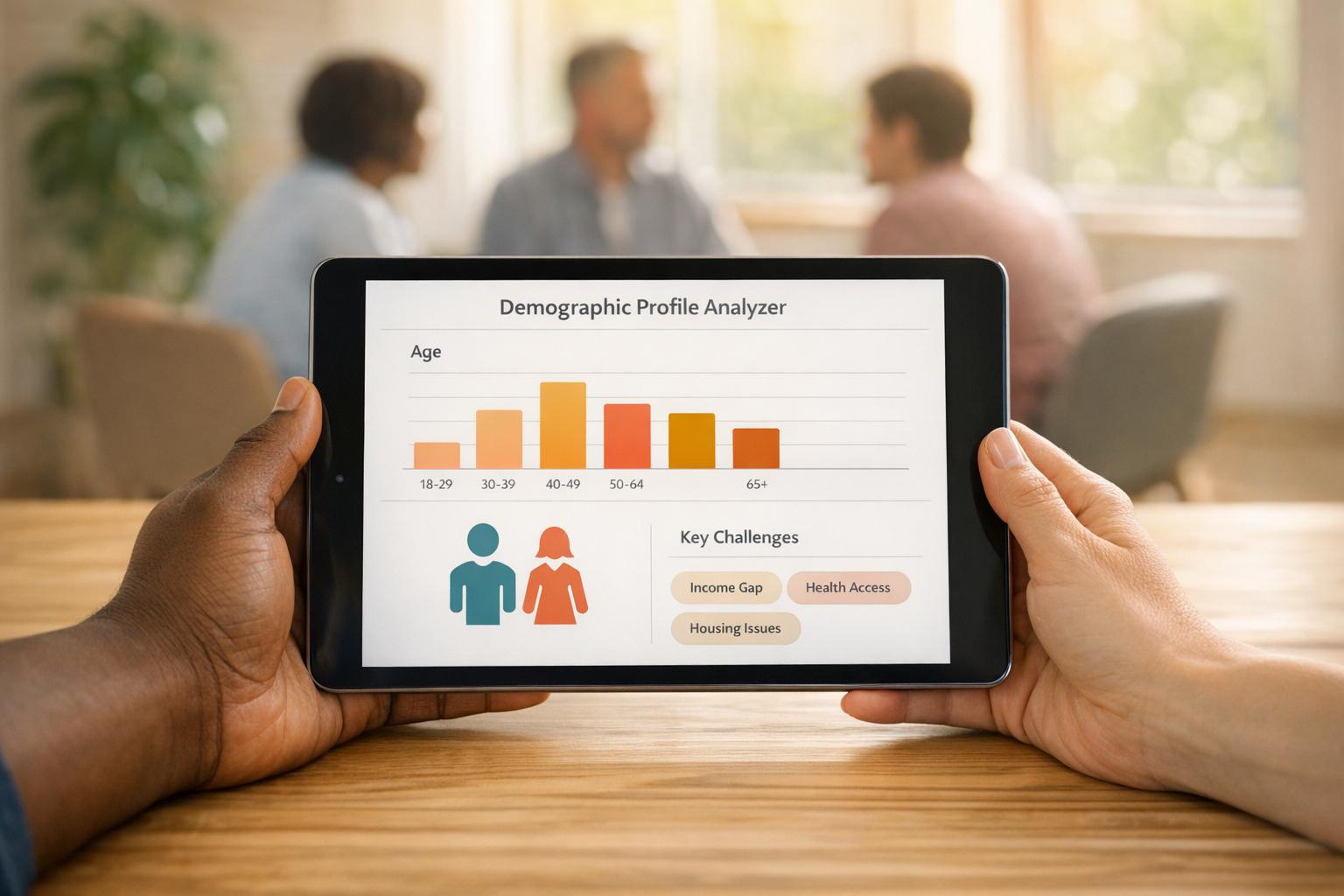
Demographic Profile Analyzer Tool
Uncover Trends with a Demographic Profile Analyzer for Recovery Communities
Supporting recovery communities requires a deep understanding of the people you’re helping. That’s where a tool like the Demographic Profile Analyzer comes in. This innovative web-based solution allows organizations and individuals to input anonymous data—think age groups, gender, location, and specific struggles—and generate clear, actionable summaries of trends and needs.
Why Understanding Demographics Matters
Every recovery community is unique. Some groups might see a higher prevalence of certain challenges, like opioid dependency, while others may face different hurdles based on age or region. By using a tool to analyze demographic patterns, you can pinpoint these differences and tailor your resources or programs accordingly. Whether you’re planning outreach or allocating support, having a data-driven snapshot of your community’s profile can make all the difference.
Privacy-First Insights
What sets this tool apart is its commitment to anonymity. No personal details are ever stored, ensuring that the focus remains on collective insights rather than individual stories. If you’re looking to better serve those in recovery, leveraging such a resource can help you act with clarity and purpose.
FAQs
How does this tool protect user privacy?
We take privacy seriously. The Demographic Profile Analyzer doesn’t store any personal identifiers—nothing like names or contact info. All data is aggregated into broad trends, so individual inputs can’t be traced back to anyone. You can use this tool with complete confidence that anonymity is maintained.
What kind of data should I input for the best results?
For the most accurate insights, include details like age ranges, gender, general location (like state or region), and specific recovery challenges—think substance type or duration of struggle. The more varied and complete the data, the better the tool can spot meaningful patterns. Just remember, keep it anonymous and avoid anything too personal.
Who can benefit from using this tool?
This tool is perfect for anyone involved in recovery support—whether you’re running a community organization, leading a support group, or even just researching trends. It’s designed to help nonprofits, counselors, and advocates understand the bigger picture of who they’re helping and what challenges are most pressing. If you’re looking to make data-driven decisions, this is for you.