
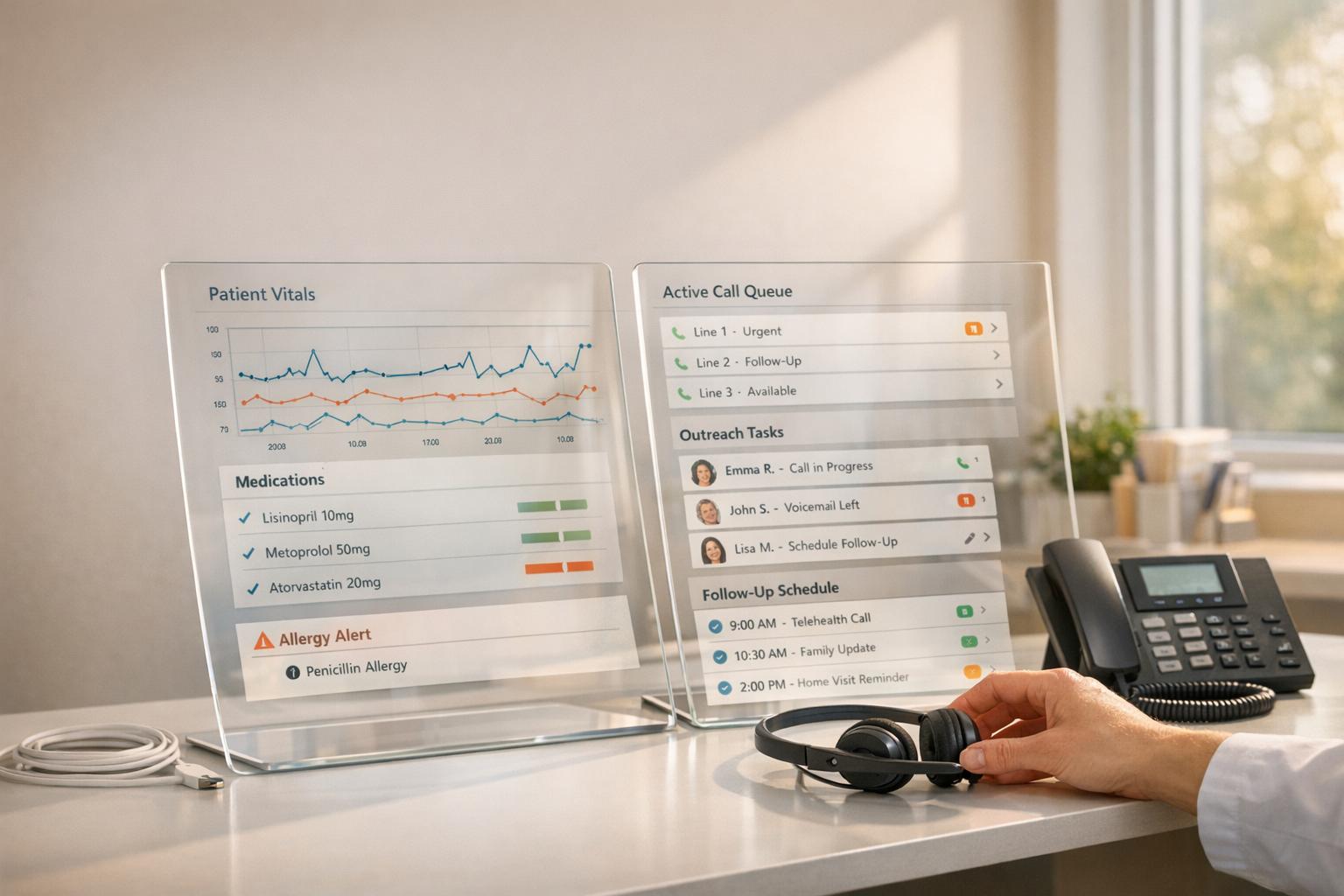
EHRs vs. CRMs for Crisis Management
When addiction recovery programs face emergencies, choosing the right tools can save lives. Electronic Health Records (EHRs) and Customer Relationship Management (CRMs) systems both play roles in crisis management, but they excel in different areas:
- EHRs focus on clinical data, offering immediate access to medical histories, medications, and treatment plans. They are essential for informed decision-making during medical emergencies.
- CRMs handle outreach and engagement, ensuring no inquiry is missed and automating follow-ups to maintain long-term connections with patients.
Key Takeaways:
- EHRs: Best for clinical documentation and decision-making in emergencies.
- CRMs: Best for managing inquiries, follow-ups, and patient engagement.
Quick Comparison:
| Criteria | EHRs | CRMs |
|---|---|---|
| Primary Use | Clinical documentation and safety | Outreach, engagement, and follow-ups |
| Data Focus | Medical histories, lab results, medications | Communication logs, lead tracking |
| Automation | Clinical alerts | Emails, texts, follow-ups |
| Emergency Role | Supports informed medical decisions | Ensures timely outreach |
| Post-Crisis Support | Tracks clinical outcomes | Tracks engagement and relapse prevention |
For addiction recovery programs, combining EHRs and CRMs can bridge gaps, ensuring both clinical needs and outreach efforts are met efficiently.
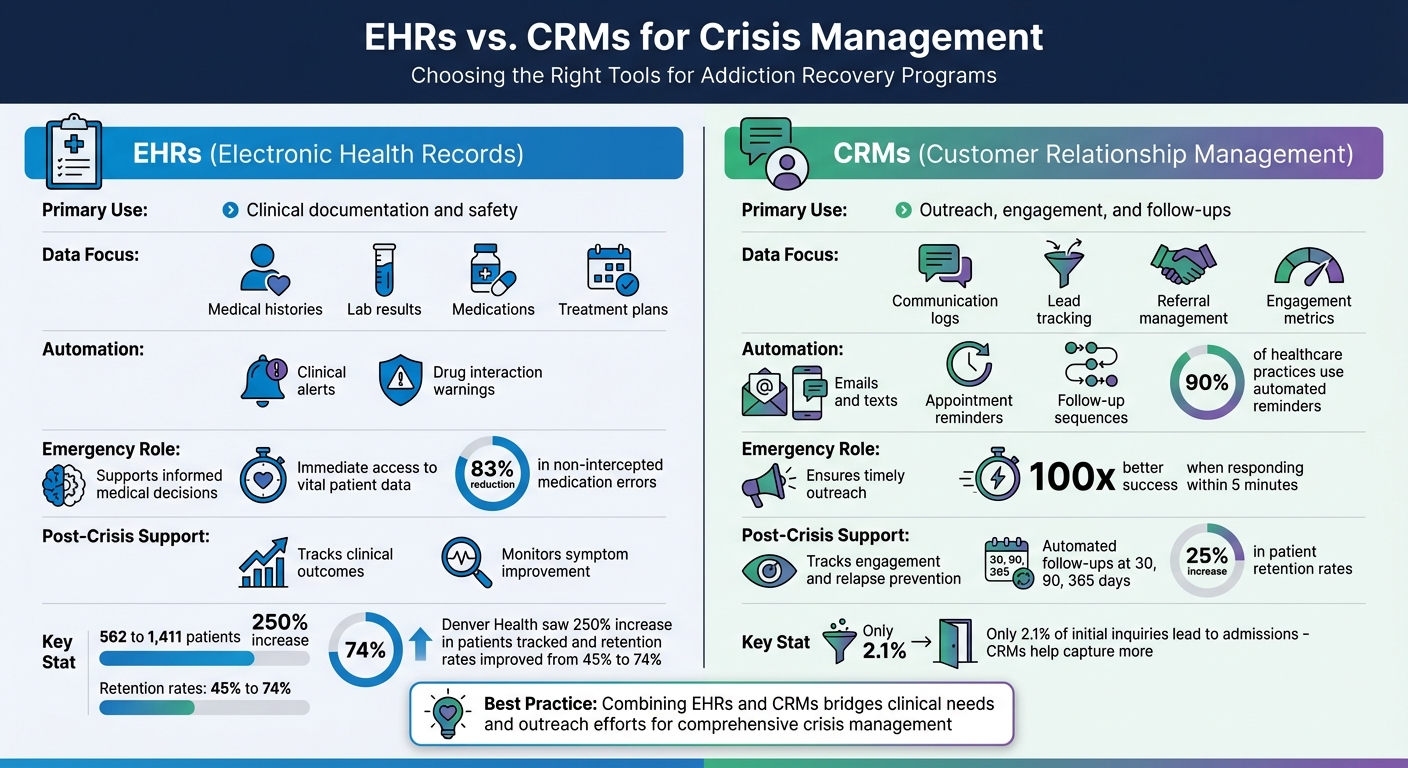
EHRs vs CRMs for Addiction Recovery Crisis Management Comparison
Patient Journey or Customer Journey? How Salesforce’s CRM Aims to Reposition the EHR
What Are EHRs and How Do They Handle Crisis Response?
Electronic Health Records (EHRs) are secure, digital systems that centralize clinical data. In addiction recovery settings, they serve as comprehensive tools for documenting encounter notes, prescriptions, lab results, and treatment plans, among other critical information.
EHR adoption has steadily increased, going from 57.6% in 2014 to 69.2% in 2017. However, as of 2022, only 29% of substance use treatment centers operated entirely without paper records. Many still rely on a mix of paper and digital systems, which can complicate crisis response efforts. Below, we’ll explore the key features of EHRs and how they play a critical role during emergencies.
Main Features of EHRs
EHR systems are designed to handle a wide range of clinical documentation, including psychosocial evaluations, therapy notes, progress updates, and discharge summaries. They also integrate essential functions like e-prescribing, lab result tracking, appointment scheduling, and billing. To comply with regulations like HIPAA and 42 CFR Part 2, these systems include features such as consent management, data segmentation, and detailed audit logs to monitor access to sensitive patient information.
Some modern EHRs are even incorporating AI technologies. These tools can assist by auto-generating draft notes and analyzing patient data to identify factors that might increase the risk of relapse.
How EHRs Work During Emergencies
In emergencies, EHRs provide immediate access to vital patient data, such as medical histories, current medications, and treatment plans. This instant availability supports quick, informed decision-making. For example, when a patient arrives at an emergency department experiencing an overdose or severe withdrawal, having their counseling records, lab results, and medication history readily accessible can make a life-saving difference.
EHRs also include clinical decision support tools, which generate alerts for potential drug interactions or allergies, helping to reduce the risk of adverse events during urgent care. Additionally, computerized provider order entry (CPOE) systems eliminate the risks associated with illegible handwriting. Studies show that these systems can cut non-intercepted medication errors by as much as 83%. Features like these enforce accuracy by requiring providers to specify medication dosages and frequencies, catching potential errors before they impact patient safety.
A real-world example highlights the effectiveness of integrated EHR systems. Between July 2021 and January 2023, Denver Health incorporated its substance use disorder (SUD) treatment data into its Epic EHR system. This integration led to a 250% increase in patients tracked as initiating SUD treatment, rising from 562 to 1,411. Additionally, 90-day treatment retention rates improved dramatically, climbing from 45% to 74%. The EHR played a key role in streamlining care coordination across the hospital’s "hub and spoke" model.
Some advanced EHRs now employ predictive analytics to flag patients at high risk of relapse. By analyzing data such as attendance patterns, engagement levels, and vital signs, these systems allow care teams to take proactive steps to prevent crises before they escalate.
What Are CRMs and How Do They Handle Crisis Response?
Customer Relationship Management (CRM) systems are software platforms designed to centralize all communication and data related to patients, leads, and referral sources. In addiction recovery, these tools streamline interactions, helping individuals navigate their recovery journey. CRMs are particularly effective in managing the "admissions pipeline", tracking people from their initial crisis inquiry through screening, insurance verification, and admission. This ensures that no one seeking help is overlooked. Let’s dive into how these systems play a role in real-time crisis response.
Main Features of CRMs
CRMs tailored for addiction recovery come equipped with features aimed at improving crisis management. For instance, automated communication tools send immediate text and email reminders for appointments or medication schedules. These reminders are widely used - nearly 90% of healthcare practices rely on them to reduce no-show rates and encourage treatment adherence.
Lead management tools are another key component, ensuring urgent inquiries are tracked and followed up on quickly when time is critical. Additionally, impact reporting features analyze program data to help secure funding and fine-tune crisis response strategies. Mobile outreach tools allow field representatives to log interactions in real time during community outreach, creating a seamless flow of information .
Recovery-focused CRMs also replace outdated paper systems with customizable incident reporting forms. These forms allow staff to document emergencies, mental health assessments, and crisis interactions with time-stamped logs, making regulatory audits and clinical continuity more efficient. Patient portals further enhance support by offering secure two-way communication, enabling clients to report triggers or request assistance between sessions.
How CRMs Work During Emergencies
During emergencies, CRMs provide real-time alerts and automate critical follow-ups. They send notifications about missed appointments, urgent case updates, or individuals at risk of falling through the cracks .
One notable example is Healing Transitions' Rapid Responder Program, which uses the Bee Purple CRM system. The platform organizes and prioritizes follow-up efforts based on daily reports from Wake County EMS. This ensures that individuals in urgent need receive prompt attention. Every interaction is meticulously recorded, allowing the program to refine its strategies and track outcomes.
"Using this platform, I have the complete profile of a person in recovery with all of our interactions in one place. The amount of time this saves us internally on streamlining administrative processes is huge."
– Justin, Recovery Center Professional
CRMs also shine in aftercare and alumni support. They automate long-term engagement, scheduling follow-ups at intervals like 30, 90, and 365 days post-treatment. These follow-ups are crucial for relapse prevention during high-risk periods. This systematic approach addresses the growing demand for recovery services; for example, in England, 310,863 adults engaged with drug and alcohol treatment services between April 2023 and March 2024 - a 7% increase that highlights the need for efficient tools. By enabling real-time responsiveness, CRMs improve outreach efforts and foster sustained engagement.
EHRs vs. CRMs: Main Differences for Crisis Management
In crisis situations, having tools that combine clinical data with effective outreach is critical. Electronic Health Records (EHRs) focus on centralizing clinical data and generating real-time alerts to enhance medical safety. On the other hand, Customer Relationship Management (CRMs) systems are designed to manage interactions from the first point of contact through long-term follow-up. Let’s take a closer look at how these systems perform during emergencies.
CRMs shine during the initial response phase. For instance, reaching out to a lead within five minutes can boost success rates by an astonishing 100 times. Meanwhile, EHRs are invaluable for clinical decision-making, offering instant access to lab results and medication histories during emergencies.
EHRs focus on capturing clinical events and vital signs, while CRMs excel at tracking broader recovery metrics such as housing stability and engagement over time. When it comes to post-crisis care, CRMs are particularly effective. They automate follow-ups at key intervals - 30, 90, and 365 days - and maintain consistent communication during high-risk periods. This is especially important in cases like substance use disorders, where relapse rates can range from 40% to 60%, with up to 85% of patients relapsing within a year of discharge. These distinctions illustrate how each system plays a unique role in managing emergencies.
Comparison Table: EHRs vs. CRMs
| Criteria | Electronic Health Records (EHR) | Customer Relationship Management (CRM) |
|---|---|---|
| Primary Goal | Clinical documentation and medical safety | Relationship management and engagement |
| Real-time Data Sharing | Clinical notes, labs, and medications across care teams | Communication logs and lead status across departments |
| Outreach Automation | Limited; mostly clinical alerts and reminders | High; automated emails, texts, and nurturing sequences |
| Compliance Handling | HIPAA/42 CFR Part 2 for clinical records | HIPAA/42 CFR Part 2 for communication and consent |
| Care Coordination Speed | Multidisciplinary clinical team coordination | Rapid admissions, referrals, and family/alumni outreach |
| Long-term Outcome Tracking | Clinical results and symptom improvement | Retention, engagement, and alumni success metrics |
sbb-itb-ce23a48
Benefits of EHRs in Crisis Situations
When a patient arrives in crisis - whether it's due to an overdose, severe withdrawal, or a mental health emergency - having instant access to their full medical history can be life-saving. EHRs eliminate guesswork by giving clinicians immediate access to critical information like medication histories, lab results, and counseling notes. This reduces the risk of harmful drug interactions and enables faster, more informed decisions when time is of the essence. Beyond immediate intervention, these systems lay the groundwork for ongoing, coordinated care.
Better Patient Data Management
EHRs replace disjointed paper records with a unified digital platform, offering care teams a complete view of each patient’s history. In emergencies, this means no more scrambling through filing cabinets or making frantic calls to locate vital information. Integrated EHR systems streamline data management, improving both treatment tracking and patient retention measures.
"Integration of SUD treatment program data into the EHR facilitated both care coordination in patient treatment and quality improvement initiatives for treatment programs." - Addiction Science & Clinical Practice
The care coordination features in EHRs ensure that patient information remains consistent, even as individuals transition between different care settings.
Compliance and Security
EHR systems are built to comply with strict privacy regulations, including HIPAA and 42 CFR Part 2, which offer additional protections for substance use disorder records. Even in the chaos of a crisis, these systems maintain security with AES-256 encryption, multi-factor authentication, and automatic session timeouts to prevent unauthorized access. Tamper-proof audit logs track every action, recording who accessed what information and when - providing a complete documentation trail for regulatory reviews.
HIPAA violations can result in penalties of up to $50,000 per breach, with annual caps reaching $1.5 million. A study involving 87 patients in a methadone program revealed that 100% had been prescribed at least one medication by a primary care provider that could cause a dangerous interaction due to incomplete sharing of their SUD history. Alarmingly, 17% of those patients ended up in the emergency room because of preventable drug interactions. EHRs equipped with data segmentation and role-based access controls help close these gaps, ensuring critical information is shared securely while maintaining privacy protections.
Benefits of CRMs in Crisis Situations
While Electronic Health Records (EHRs) are great for managing clinical data, Customer Relationship Management systems (CRMs) shine in real-time engagement. They help organizations respond quickly, maintain consistent communication, and make informed decisions based on engagement patterns. Let’s dive into how CRMs deliver measurable results during addiction recovery crises.
Better Outreach and Engagement
In a crisis, timing is everything. CRMs allow admissions teams to respond to urgent inquiries immediately, keeping track of every interaction - from the first call to screening and insurance verification - ensuring no one gets overlooked.
Automated workflows take the pressure off staff while maintaining vital connections. Features like automated reminders help reduce no-show rates by sending timely appointment notifications, medication alerts, and follow-up messages through SMS, email, or voice calls. These actions are triggered by patient behavior or important milestones. For instance, if someone misses a counseling session, the CRM can instantly send a personalized check-in message and notify the care team.
"The CRM helps industrialize compassion – ensuring caring actions happen consistently and not just when a particular staffer remembers." - BehaveHealth
CRMs also extend their impact beyond immediate crises by supporting long-term engagement. Alumni tracking tools send scheduled outreach messages at intervals like 30, 90, and 365 days post-discharge. This ongoing communication can detect early warning signs of relapse and provide timely support. With centralized patient histories and communication preferences, staff can personalize every interaction, offering meaningful support during the recovery journey. These engagement strategies not only build trust but also generate valuable data for improving crisis response.
Data-Driven Decision Making
CRMs don’t just facilitate outreach - they turn data into actionable insights. Real-time dashboards and analytics give administrators a clear picture of what’s happening during a crisis. For example, if there’s a surge in overdose-related calls or an increase in no-shows, teams can quickly identify issues and reallocate resources or adjust staffing as needed. This is especially critical in an industry where only about 2.1% of initial inquiries lead to admissions.
Custom dashboards also highlight which outreach methods - like web forms, phone calls, or referrals - work best during high-demand periods. This allows teams to focus their efforts where they’ll make the most impact. Additionally, real-time updates ensure seamless communication. If a counselor updates a patient’s record, medical staff are immediately informed, allowing for quick adjustments to treatment plans. Programs using healthcare-specific CRMs have reported a 25% increase in patient retention rates thanks to personalized outreach and loyalty campaigns.
CRMs also help teams anticipate future needs. By analyzing seasonal trends in crisis inquiries or tracking engagement metrics - like a drop in portal activity or missed appointments - organizations can prepare proactively rather than scrambling to react. Early detection of potential relapses or crises ensures that teams can intervene before situations worsen.
When to Choose Recovery Center CRM by Bee Purple for Crisis Management
If your addiction recovery program needs to respond swiftly during emergencies while maintaining meaningful, long-term connections with individuals in recovery, Recovery Center CRM by Bee Purple offers tools tailored specifically for these challenges. Its features are designed to enhance crisis outreach and support for addiction recovery, making it a valuable choice for such critical scenarios.
Features Built for Addiction Recovery
This platform includes specialized tools to assist during crises. One standout feature is the free inventory app called Kitkeeper, designed to track life-saving supplies like Naloxone and Nicotine Replacement Therapy (NRT) kits. With real-time inventory tracking, your team always knows what’s available - an essential advantage when every second counts.
Another key capability is its integration with Emergency Medical Services (EMS) reports. This allows the system to prioritize follow-ups effectively by leveraging EMS data. It also keeps detailed records of client demographics, assessments, and barriers to health, while managing follow-up schedules. This consistent communication builds trust and strengthens relationships over time.
"Using this platform, I have the complete profile of a person in recovery with all of our interactions in one place. The amount of time this saves us internally on streamlining administrative processes is huge because having that one centralized location with demographic information, the referrals we have made, etc., is so easy to understand and work with." - Justin, User
The CRM also features automated outreach workflows to maintain regular contact during critical periods. Scheduled reminders and follow-ups - at intervals like 30, 90, and 365 days post-discharge - help ensure no one is overlooked. Meanwhile, the system adheres to strict HIPAA and SOC 2 compliance, safeguarding sensitive recovery data with high-level security standards. Together, these tools create a foundation for effective crisis response and ongoing recovery support.
How It Improves Crisis Response
Recovery Center CRM enhances crisis management with centralized profiles that provide staff with instant access to a person’s complete recovery history, including past interactions, referrals, and demographic details. This eliminates the need to search through multiple systems during emergencies, saving valuable time.
The platform’s workflows and data-driven reports also allow teams to adapt protocols quickly. It generates detailed reports on admissions, occupancy, and outcomes, which can be used to secure funding and guide strategic improvements.
Importantly, the CRM empowers teams to act on the 5-minute rule: responding to crisis inquiries within 5 minutes instead of 30 minutes significantly improves outcomes. Automated alerts and prioritized outreach lists, informed by EMS data, enable your team to connect with individuals at the exact moment they’re ready to accept help - when it matters most.
Conclusion: Choosing the Right Tool for Addiction Recovery Programs
How EHRs and CRMs Work Together
EHRs and CRMs play distinct yet complementary roles in managing crises within addiction recovery programs. EHRs shine in clinical documentation, offering instant access to critical information like medication lists, treatment plans, and lab results during emergencies. This ensures clinicians can make informed, time-sensitive decisions when every second matters. On the other hand, CRMs focus on the broader recovery journey, helping track outreach efforts, referrals, and long-term obstacles to health. By integrating these two systems, modern recovery programs combine the strengths of both - EHRs for clinical insight and CRMs for maintaining ongoing engagement. This synergy creates a foundation for tools tailored to rapid crisis outreach.
Why Recovery Center CRM Is the Better Choice
Recovery Center CRM builds on the advantages of integrated systems, offering features designed specifically for crisis management in addiction recovery. Traditional EHRs often struggle with siloed data, leaving out crucial non-medical information like social services and referrals. Recovery Center CRM, developed by Bee Purple, bridges these gaps with tools that excel in crisis scenarios. Its integration with EMS data, automated outreach workflows, and centralized profiles ensures no individual is overlooked during emergencies.
Timely, well-organized outreach can be life-saving. The platform not only supports this but also aligns with the compliance requirements of state-wide public health initiatives. By automating repetitive administrative tasks, it frees up your team to focus on what truly matters - patient care. Recovery Center CRM simplifies outreach, documentation, and follow-up, making it a vital asset for programs prioritizing crisis intervention.
FAQs
How do EHRs and CRMs work together to improve crisis management in addiction recovery?
EHRs and CRMs complement each other to improve crisis management by blending clinical care with efficient communication and engagement strategies. EHRs focus on keeping medical records accurate and updated in real time, enabling seamless coordination among care providers. This ensures that all clinical data is readily accessible when needed. Meanwhile, CRMs excel at improving communication, automating follow-ups, and tracking interactions, making it easier for teams to stay in touch with individuals during recovery.
When these tools are integrated, crisis management teams can offer more tailored and coordinated support. EHRs handle the clinical side, while CRMs focus on outreach and sustained engagement. Together, they help improve recovery outcomes and strengthen crisis response efforts.
What are the main advantages of using CRMs for managing outreach during addiction recovery crises?
CRMs play a crucial role in managing outreach during addiction recovery crises by organizing and centralizing patient information. They provide a comprehensive view of each individual’s recovery journey, including key details like demographics, treatment history, and ongoing support needs. This enables outreach efforts to be timely, tailored, and responsive to the specific circumstances of each person.
Beyond data organization, CRMs take over routine tasks like scheduling, sending reminders, and managing follow-ups through automation. This frees up staff to focus their energy on direct care and crisis intervention, where their expertise is most needed. CRMs also use data analytics to offer actionable insights, helping recovery centers assess and improve their outreach strategies over time.
Equally important, CRMs are designed to comply with HIPAA regulations, ensuring that sensitive health information is managed securely - an essential factor in crisis situations. By streamlining workflows and improving communication, CRMs help recovery programs deliver more consistent and effective support when it’s needed most.
Why is integrating EHR and CRM systems essential for addiction recovery programs?
Integrating Electronic Health Records (EHRs) with Customer Relationship Management (CRM) systems plays a key role in improving addiction recovery programs. EHRs handle sensitive health data securely, while CRMs simplify communication, automate routine tasks, and track patient engagement. Together, they create a cohesive system that supports both crisis management and long-term recovery efforts.
This combination allows for smoother data sharing among healthcare providers, judicial systems, and community organizations - essential when managing cases with multiple parties involved. It also eases administrative workloads, giving care teams more time to focus on patients. By working together, EHRs and CRMs improve communication, meet privacy standards like HIPAA, and make recovery plans more tailored and data-driven.