
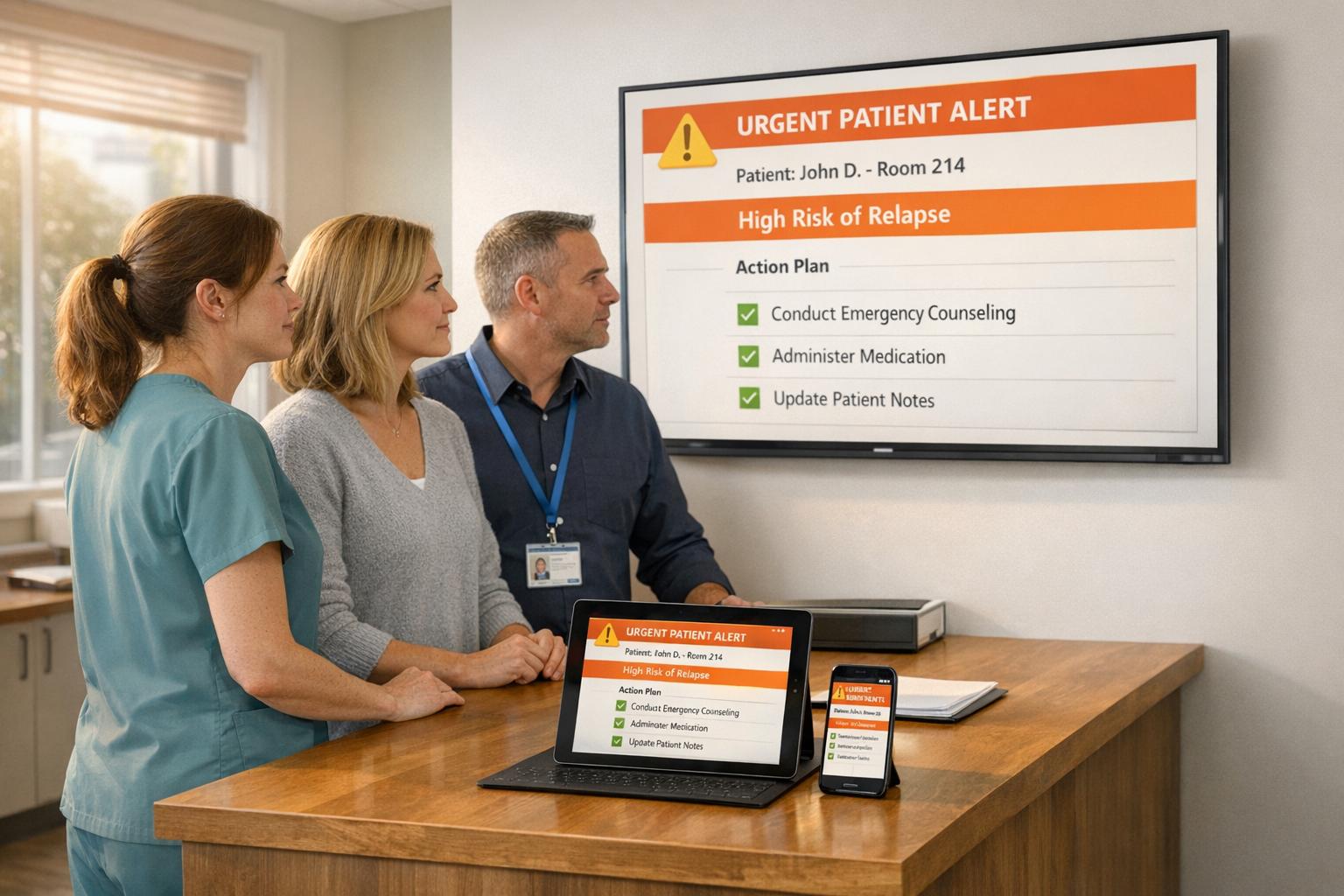
How CRMs Improve Crisis Response in Recovery Centers
When recovery centers face emergencies, outdated systems often slow down critical responses. Fragmented records, poor communication, and a lack of automated tools can lead to missed opportunities to help those at risk. Recovery Center CRM, developed by Bee Purple, addresses these challenges by centralizing patient data, automating alerts, and improving team collaboration.
Key takeaways:
- Centralized Data Access: All client information is stored in one system, reducing delays in decision-making.
- Automated Alerts: Notifications for missed appointments or high-risk patterns help staff respond faster.
- Improved Collaboration: Role-based permissions streamline communication across teams while staying compliant with regulations.
- Predictive Insights: Data analysis identifies warning signs early, allowing for preventative action.
Centers using systems like this have seen a 40% increase in patient retention and a 30% reduction in administrative workload, enabling more focus on patient care. These tools not only improve crisis response but also enhance long-term outcomes by preventing emergencies before they occur.
Crisis Response Problems in Recovery Centers
Poor Communication and Team Coordination
When a crisis hits, miscommunication can quickly escalate a manageable issue into a dangerous situation. Recovery centers often face an overwhelming volume of emails, causing critical updates to get buried in inboxes. Over time, staff may stop reading these messages altogether, missing vital procedural changes that could make all the difference in an emergency.
To make matters worse, conflicting instructions from different leaders force staff to waste precious time verifying guidance instead of acting swiftly. Research on emergency department workers highlights that excessive and redundant communication doesn't solve problems - it can actually increase interpersonal tensions. Non-clinical staff often feel left out of these communication loops entirely, leaving them disconnected from the care process and creating a divide where support teams feel undervalued or isolated.
This lack of coordination also makes accessing critical data during emergencies even harder.
Difficulty Tracking and Accessing Data
Fragmented record-keeping systems are another major obstacle. Staff often find themselves digging through a mix of paper files and digital systems to locate essential information. For example, if a counselor needs to check whether a high-risk client has a history of overdoses or missed appointments, they might have to search across multiple platforms or wait for someone else to retrieve physical records. These delays can be costly.
Such disjointed systems create dangerous gaps in care, particularly during transitions between call centers, mobile teams, and stabilization facilities. Without a unified view of a client’s history, providers are left making decisions based on incomplete information, which can worsen a client’s already fragile state. Centralized platforms, which consolidate all client interactions, can help close these gaps by making vital data accessible in real time.
But the lack of cohesive data systems also hinders efforts to prevent crises before they happen.
Missing Tools for Crisis Prevention
Most recovery centers are stuck in a reactive cycle, simply responding to crises as they arise. This happens because they lack tools to identify warning signs early. Without automated systems to flag high-risk patterns - such as a client missing multiple appointments or showing signs of disengagement - staff struggle to determine who needs immediate attention. Siloed client data makes it nearly impossible to spot trends that could signal an impending crisis.
The stakes are high. In addiction treatment, for instance, the average conversion rate from an initial inquiry to admission is just 2.1%. Reaching out to a lead within 5 minutes instead of 30 minutes can increase the chances of successful contact by an astonishing 100 times. Yet, without automated tools to trigger timely interventions, recovery centers miss opportunities to reconnect with vulnerable clients before they relapse. This leaves staff overwhelmed and unable to prioritize those in urgent need, putting lives at risk.
sbb-itb-ce23a48
How Recovery Center CRM Improves Crisis Response
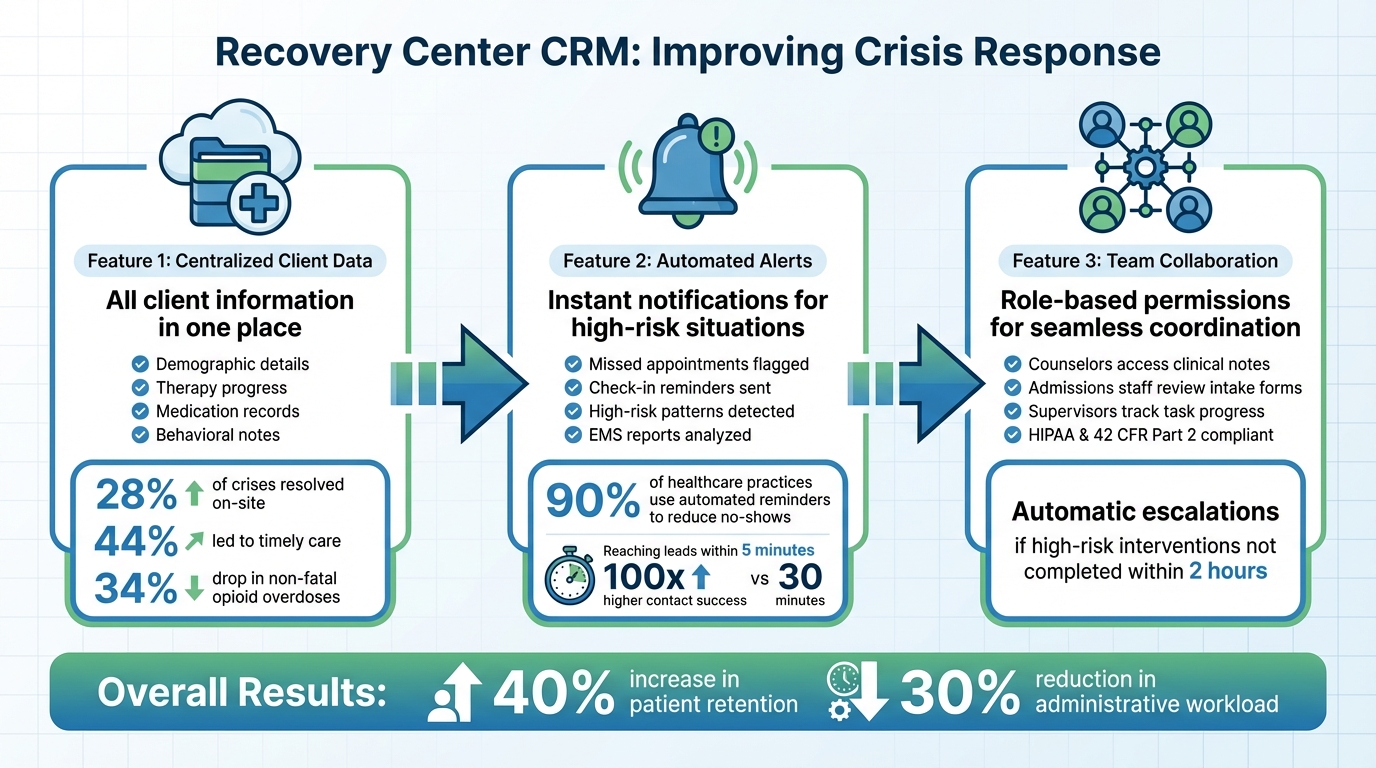
How Recovery Center CRM Improves Crisis Response: 3 Key Features
Centralized Client Data for Quick Decisions
Recovery Center CRM brings all client information together in one easily accessible place. Staff can quickly review everything from demographic details and therapy progress to medication records and behavioral notes - without the hassle of switching between multiple systems.
This streamlined setup has had a big impact on programs like Healing Transitions' Rapid Responder Program. Their team efficiently compiles daily reports from Wake County EMS, documenting client evaluations, identifying health barriers, and scheduling follow-ups. As one recovery professional put it, "Using this platform, I have a complete client profile with all interactions in one place. The amount of time this saves us internally on streamlining administrative processes is huge because having that one centralized location... is so easy to understand and work with".
Real-time insights into resources and treatment availability make a measurable difference. For example, 28% of crisis situations were resolved on-site, 44% led to timely care, and facilities saw a 34% drop in non-fatal opioid overdose incidents compared to typical rates. The CRM also includes interactive risk assessment tools, helping staff evaluate a client’s immediate needs and choose the best course of action.
By centralizing data, the platform ensures that automated alerts can trigger instant responses when needed.
Automated Alerts and Notifications
With centralized records as the foundation, Recovery Center CRM uses automated workflows to keep a close eye on client interactions. If a high-risk client misses a check-in or appointment, the system immediately notifies the appropriate staff, enabling rapid outreach before the situation worsens. The CRM also prioritizes follow-up efforts by analyzing external data, like EMS reports, ensuring that clients with the most urgent needs are addressed first.
Beyond responding to crises, automated reminders play a role in preventing them. Nearly 90% of healthcare practices use automated reminders to boost patient compliance and reduce no-shows. For recovery centers, this translates to timely medication reminders, milestone celebrations, and follow-up check-ins during the crucial months after treatment.
In an industry where only 2.1% of inquiries typically convert into admissions, these alerts help centers respond with the speed and precision needed to save lives.
Team Collaboration with Role-Based Permissions
Recovery Center CRM acts as a central hub for crisis call centers, mobile response teams, and treatment providers. Role-based permissions ensure that each team member sees only the information they need - counselors access clinical notes, admissions staff review intake forms, and supervisors track task progress - all while staying compliant with HIPAA and 42 CFR Part 2 guidelines.
This structured access prevents unnecessary notifications by tailoring alerts to specific roles. For example, only relevant team members receive crisis updates. Supervisors can assign follow-up tasks directly within the platform and set up automatic escalations if interventions for high-risk clients aren’t completed within a set timeframe, such as two hours. When teams share real-time updates on bed availability and resource allocation, wait times shrink, and individuals in urgent need get quicker access to care.
Using Data Insights to Prevent Future Crises
Identifying Patterns in High-Risk Clients
Data insights aren't just about responding to crises - they're about preventing them. By analyzing patterns, organizations can predict risks and take action before issues spiral out of control.
Take Recovery Center CRM, for example. It tracks client activity, like portal logins or engagement with discharge plans, to detect early warning signs. If a client stops checking in or misses scheduled appointments, the system flags the drop in engagement and alerts staff for a timely clinical response. This proactive method ensures intervention happens before problems escalate.
The platform also builds detailed client profiles by compiling demographic data, assessment results, and documented health challenges. Staff can then identify trends, such as recurring triggers or the time between incidents, to refine their approach. With treatment demands increasing, this kind of data-driven prioritization is crucial for using resources wisely.
Recovery Center CRM even integrates external data sources, like daily EMS reports, to automatically rank follow-up efforts based on urgency. As Bee Purple puts it, "The system organizes and prioritizes follow-up attempts, ensuring those with the highest need receive the most attention". By replacing guesswork with evidence-based decisions, this approach ensures that energy and resources are directed toward the clients who need them most. These insights not only drive immediate interventions but also pave the way for long-term program improvements, which we’ll explore further in the next section.
Creating Impact Reports for Compliance and Program Improvement
Centralized data isn’t just about better client care - it’s also key for staying compliant and improving programs. Recovery Center CRM simplifies compliance by tracking treatment plan reviews, consent forms, and audit logs to meet standards like HIPAA, 42 CFR Part 2, and accreditation requirements from The Joint Commission and CARF. Automated alerts notify staff of overdue reviews or expiring authorizations, helping to close compliance gaps before they occur.
The platform also keeps an eye on financial health by monitoring key metrics like clean claim rates (aiming for 95% or higher), denial rates (targeting less than 10%), and authorization approval success (90% or higher). Operational data, such as occupancy rates, referral performance, and conversion rates from inquiries to admissions, is also tracked to improve efficiency.
For grant-funded programs, Recovery Center CRM offers customizable reporting tools tailored to meet the specific data requirements of funding organizations. These impact reports not only demonstrate program effectiveness but also support future funding applications. As one user from Healing Transitions' Rapid Responder Program shared, "The ability to generate reports allows for informed decision-making, continuously improving policies and procedures".
Conclusion
Handling crises effectively in recovery centers requires quick action, precise decisions, and seamless teamwork - qualities that often falter when systems are disjointed. Recovery Center CRM addresses these challenges directly.
By closing communication gaps and providing staff with instant access to comprehensive patient histories, response times get faster, and the quality of interventions improves. Features like automated reminders and role-based access ensure high-risk clients stay engaged and receive updates tailored to their needs. Facilities using CRM systems have seen impressive results, including up to a 40% boost in patient retention and a 30% reduction in time spent on administrative tasks. This means more resources can be dedicated to direct patient care.
Beyond managing immediate crises, the platform's data insights empower centers to adopt a proactive approach to care. By spotting trends in client behavior and integrating external data sources like EMS reports, staff can focus outreach efforts on those who need it most. This shift from reactive to proactive care creates opportunities for ongoing improvements in programs and services.
With centralized data, automated workflows, and compliance tracking, recovery centers can achieve better outcomes during crises and build a foundation for long-term success. Real-time insights and automated follow-ups allow teams to prioritize what truly matters - caring for their patients.
FAQs
How can a centralized data system enhance crisis response in recovery centers?
A centralized data system brings together key client information - like demographics, treatment history, and crisis interactions - into a single, easy-to-access platform. With all this data in one place, staff can communicate more effectively, respond to urgent needs faster, and work seamlessly during critical moments.
These systems also empower recovery centers to make better, data-informed decisions. They help track outcomes, spot trends, and refine care strategies, ensuring every step taken is both timely and accurate. The result? Faster crisis response and stronger support for long-term recovery efforts.
How do automated alerts help prevent emergencies in recovery centers?
Automated alerts serve as an early warning system, helping staff tackle potential issues before they turn into bigger problems. These alerts send timely notifications for appointments, follow-ups, and medication checks, ensuring that critical tasks don’t slip through the cracks and improving communication across the board.
Beyond reminders, these alerts keep clinicians informed in real time about changes in a client’s risk factors or shortages of essential supplies, like Naloxone kits. This allows staff to act quickly and efficiently, leading to better care and outcomes. Since these alerts are seamlessly built into the CRM’s scheduling and workflow systems, they remove the hassle of manual tracking, keeping everything organized and helping prevent emergencies before they happen.
How does Recovery Center CRM help ensure compliance with regulations like HIPAA?
Recovery Center CRM includes features aimed at supporting compliance with critical regulations like HIPAA. This ensures that sensitive information is managed with care and in line with secure data handling practices. Although the platform's specific compliance measures aren't detailed, it emphasizes privacy and data protection to cater to the unique requirements of recovery centers.
If you'd like to learn more about how it meets regulatory standards, consider contacting the Recovery Center CRM team directly.