

Real-Time Crisis Tools for Statewide Recovery Programs
Every second counts in addiction recovery crises. Whether it's an overdose, relapse, or mental health emergency, real-time tools are transforming how states respond. These systems connect crisis hotlines, mobile response teams, and stabilization centers, ensuring faster intervention and smoother transitions to long-term care.
Key takeaways:
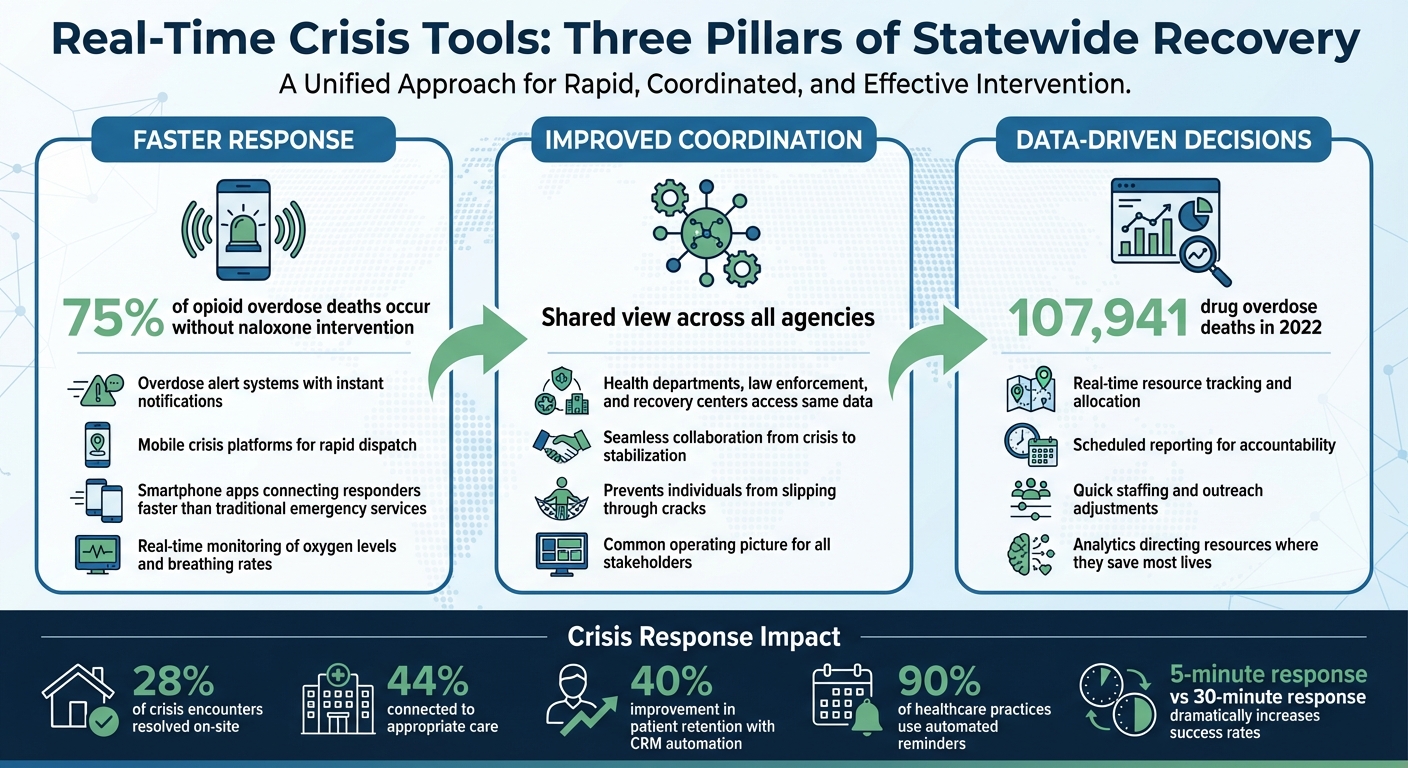
- Faster Response: Overdose alert systems and mobile crisis platforms provide instant notifications and dispatch responders quickly.
- Improved Coordination: Shared data across agencies ensures everyone is aligned, reducing delays and missed opportunities.
- Data-Driven Decisions: Real-time tracking and analytics help allocate resources effectively and improve outcomes.
With tools like Recovery Center CRM and programs like ODMAP, states are addressing behavioral health crises more efficiently, saving lives through better communication and integration.
Three Pillars of Real-Time Crisis Response in Statewide Recovery Programs
Benefits of Real-Time Tools for Statewide Recovery Programs
Faster Crisis Response and Communication
In overdose situations, every minute matters - it's often the difference between life and death. Real-time tools, like those that monitor oxygen levels and breathing rates, can send immediate alerts when overdose thresholds are detected. Alarmingly, about 75% of opioid overdose deaths occur without naloxone intervention, often because the person is using drugs alone.
Now, smartphone apps are stepping in to bridge the gap. These tools allow both professional responders and community volunteers to reach overdose sites faster than traditional emergency services might. Pre-planned communication protocols ensure that stakeholders can act quickly and consistently, cutting down on delays when time is critical. This swift action paves the way for better coordination among all involved agencies.
Better Coordination Among Agencies
Real-time tools provide a shared view of the situation, allowing health departments, law enforcement, and recovery centers to access the same up-to-date information. This integration ensures seamless collaboration, from the moment someone is in crisis to their stabilization in a recovery facility.
"Effective disaster response activities rely on flexible communications and information systems that provide a common operating picture to emergency management/response personnel and their affiliated organizations." - SAMHSA
This shared system prevents individuals from slipping through the cracks and keeps everyone on the same page regarding current actions and next steps. It also supports broader efforts to streamline data-sharing strategies at the state level.
Better Data Collection and Reporting
Real-time tracking is changing the way states manage recovery programs. By monitoring resources in real time, administrators can make quick adjustments to staffing, outreach efforts, and more. This ongoing feedback ensures that recovery strategies remain responsive and effective.
Scheduled reporting further enhances accountability, helping states refine their approaches based on clear, actionable data. With drug overdose deaths reaching a staggering 107,941 in 2022, these tools are essential for directing limited resources to where they can save the most lives.
Real-Time Crisis Tools and Applications
Statewide recovery programs rely on three main types of real-time tools to address crises effectively: overdose alert systems, mobile crisis response platforms, and community-led communication networks. Let’s take a closer look at how these tools work.
Overdose Alert and Monitoring Systems
The Overdose Detection Mapping Application Program (ODMAP), developed by the Washington/Baltimore High Intensity Drug Trafficking Area (HIDTA), is a key tool for tracking overdose incidents. It connects first responders with public health agencies, offering real-time data on fatal and non-fatal overdoses, as well as naloxone use.
"ODMAP provides near real-time suspected overdose data across jurisdictions to support public safety and public health efforts to mobilize an immediate response to a sudden increase, or spike, in overdose events." - ODMAP
ODMAP integrates data almost instantly using APIs that connect directly to agency Record Management Systems, ensuring location accuracy with GPS. Implementation typically takes just 2–3 weeks.
Customizable Spike Alert thresholds allow agencies to receive automated email notifications when overdose incidents surpass normal levels in a specific area. This feature enables authorities to act quickly, deploying resources where they’re needed most. These alerts are critical for initiating immediate, coordinated responses to sudden overdose surges.
Mobile Crisis Response Platforms
Mobile Crisis Teams use specialized platforms to deliver rapid, on-site assistance during behavioral health emergencies. These tools bridge the gap between 988 crisis call centers and field teams, ensuring that help is dispatched based on real-time data rather than delayed reports.
Statistics show that 28% of crisis encounters are resolved on-site thanks to these systems, while 44% result in individuals being connected to appropriate care through improved coordination. By linking behavioral health departments, hospitals, faith-based groups, and community organizations, these platforms also ease the strain on emergency rooms and law enforcement.
Community-Led Crisis Communication Platforms
Grassroots tools like Reddit, text alerts, and wastewater analysis offer localized insights that complement formal systems. These community-driven methods can uncover trends and information that state agencies might overlook.
To streamline communication during crises, organizations should create a library of pre-approved messages tailored to various scenarios. This preparation minimizes delays and ensures quick, unified updates when a spike alert is triggered.
Using Recovery Center CRM for Real-Time Crisis Management
Recovery Center CRM, created by Bee Purple, streamlines the response process for statewide recovery programs by cutting down on administrative delays. By centralizing data, the platform ensures that critical information reaches the right people instantly. Below, we’ll explore how this tool improves crisis response through automation, real-time tracking, and detailed reporting.
Automated Communication Workflows
The platform uses automated triggers to send notifications via SMS, email, voice calls, and push alerts. These automated workflows also include reminders, which help reduce missed appointments, deadlines, and follow-ups. For example, nearly 90% of healthcare practices now use automated reminders, significantly lowering the rate of no-shows. Additionally, reaching out to individuals within 5 minutes, instead of waiting 30 minutes, can dramatically increase the chances of a successful response. This speed is especially crucial in crisis scenarios.
Real-Time Tracking of Recovery Journeys
With Recovery Center CRM, all client data is stored in a centralized, real-time system. This allows care teams to document progress as it happens, enabling them to adjust recovery plans based on the most current information. Features like schedule blocking let staff allocate time for client care, documentation, and follow-ups. Automated workflows also send internal notifications when milestones are achieved or when check-ins are missed, ensuring no gaps in care. This real-time tracking creates a smooth connection between immediate interventions and long-term recovery planning. CRMs with automation have been shown to improve patient retention rates by up to 40%.
Statewide Impact Analytics and Reporting
The platform includes real-time dashboards that provide statewide visibility and accountability. These tools help state leaders identify areas of high need and allocate resources more effectively. The CRM’s analytics also support data-driven improvements by identifying risks, such as suicide, and ensuring individuals receive timely care. Detailed reports generated by the platform allow programs to evaluate outcomes, understand treatment trends, and refine support strategies based on concrete results. This data integration not only strengthens statewide recovery efforts but also ensures compliance with federal grant requirements and legislative reporting needs.
sbb-itb-ce23a48
How to Implement Real-Time Tools in Statewide Programs
Assessing Program Needs and Objectives
Start by evaluating your program using SAMHSA's three key pillars: Contact (like the 988 Lifeline), Response (such as Mobile Crisis Teams), and Safe Place (stabilization services). These pillars are the foundation of any effective crisis system. To guide your efforts, refer to the "2025 National Guidelines for a Behavioral Health Coordinated System of Crisis Care".
"The National Guidelines for Crisis Care – A Best Practice Toolkit... is intended to help mental health authorities, agency administrators, service providers, state and local leaders think through and develop the structure of crisis systems that meet community needs." - SAMHSA
Engage with experienced crisis responders and individuals who have used crisis services to pinpoint gaps in the system. Standardizing crisis definitions is also critical to ensure all stakeholders are aligned. For rural areas, focus on understanding unique risks and strengths to design tools that enhance disaster resilience in these communities. State-specific resources, like the checklists created by the Pennsylvania Department of Health in collaboration with Drexel University, can also provide valuable planning guidance.
Once you've clearly defined your program's needs, the next step is preparing your team with consistent training.
Training Staff and Stakeholders
Equip your staff with training on Incident Command System (ICS) terminology to ensure everyone understands terms like "Assigned" (active), "Available" (ready), and "Out-of-service". This shared language reduces confusion during crises. It's also important for staff to understand their role within their unit type - whether they are a "Single Resource" (individual agency), a "Task Force" (multi-task responders), or a "Strike Team" (crisis counseling workforce).
Provide practical tools like video tutorials, checklists, and manuals to make training accessible and actionable. Develop message templates tailored for different audiences to ensure swift and accurate communication during crises. A shared reporting calendar can help keep the team organized, setting clear dates for data collection and reporting deadlines. Regular interagency meetings are also crucial for sharing insights, avoiding duplicated efforts, and refining outreach strategies to meet community needs.
With a well-trained team in place, it's essential to focus on ongoing evaluation to keep improving.
Monitoring and Continuous Improvement
After training, establish systems to monitor and adapt to changing crisis demands. A regional crisis call center can play a key role in coordinating real-time care. Monthly collaborative meetings provide a platform for sharing best practices and fine-tuning crisis response strategies. Implement standardized decision trees at call centers to help staff quickly identify the right responders, minimizing unnecessary involvement of law enforcement or emergency departments. Regularly reviewing performance data ensures that processes stay aligned with evolving community needs and challenges.
Compliance and Security for Real-Time Tools
When deploying real-time crisis tools as part of a statewide recovery program, ensuring compliance is non-negotiable. The Cybersecurity and Infrastructure Security Agency (CISA) highlights this in the National Emergency Communications Plan, which sets critical security goals for federal, state, and local agencies to integrate into their crisis communication strategies. Every platform used in crisis response must adhere to these stringent standards.
The 2025 National Guidelines for a Behavioral Health Coordinated System of Crisis Care stress the importance of safeguarding sensitive behavioral health data as it moves between hotlines, mobile crisis teams, and stabilization services. SAMHSA provides clear guidance on this front:
"Share sensitive information only on official, secure websites".
This means every crisis data platform must implement HTTPS encryption and follow strict security measures. With the Homeland Security Act of 2002 making compliance a legal requirement, these mandates form the backbone of robust data security practices.
Data Security and Privacy
Recovery Center CRM is built with HIPAA and SOC 2 compliance at its core. By centralizing documentation and tracking outcomes, the platform ensures data integrity and privacy, which are crucial for statewide public health efforts. This structure guarantees that when a 988 operator transitions a case to a mobile crisis team or when a stabilization center accesses an individual’s recovery history, the data transfer happens securely, safeguarding patient confidentiality.
The platform’s secure design also allows courts, health departments, and housing providers to share information under tightly controlled conditions. This capability is vital for coordinating care across the three key elements of crisis response: someone to contact, someone to respond, and a safe place to receive help.
Role-Based Permissions and Access Control
To uphold these security standards, role-based permissions are implemented to restrict access strictly to what is necessary for each user. This ensures that 988 operators, mobile crisis teams, and stabilization centers can only view the information relevant to their role in crisis intervention. By aligning with CISA’s security objectives, this approach supports the rapid yet secure information sharing required in emergencies.
Recovery Center CRM’s access control system tailors data interaction according to user roles. For example, a mobile crisis responder in the field can access critical details needed for immediate care, while program administrators can review aggregate data for reporting purposes. This layered access ensures secure collaboration across multiple agencies without compromising individual privacy.
Conclusion
Real-time crisis tools play a crucial role in statewide recovery efforts. As SAMHSA points out, "Effective disaster response activities rely on flexible communications and information systems that provide a common operating picture to emergency management/response personnel and their affiliated organizations". These tools allow agencies to coordinate the core elements of crisis care: someone to contact, someone to respond, and a safe place for help.
Time is everything during a crisis. Take Eaton County Central Dispatch in Michigan as an example. After introducing real-time alert systems in June 2023, they created 11,406 Smart911 profiles and streamlined responses across seven police departments and 13 fire departments using a single dashboard. As Director Kelley M. Cunningham explained, "Seconds save lives, and in that situation, I had a solution that offered me a way to quickly communicate when our first option was no longer available". This highlights how effective communication systems can make an immediate difference.
For leaders overseeing statewide initiatives, the future lies in adopting integrated platforms that centralize documentation, automate communication, and provide real-time analytics. Recovery Center CRM embodies this vision, offering secure, automated crisis management that adheres to HIPAA and SOC 2 standards. It allows courts, health departments, and housing providers to share critical information securely, creating a seamless recovery network.
The move toward coordinated systems mirrors a larger shift across the country. Behavioral health crisis care is transforming into interconnected networks capable of offering support anytime, anywhere. By deploying real-time tools alongside proper training, pre-scripted messaging, and ongoing quality improvement measures, statewide programs can reduce redundancies, accelerate response times, and ultimately save lives.
The technology to make this happen is already here. The real question is: how soon will these tools be implemented to make a difference?
FAQs
How do real-time crisis tools help improve response times in addiction recovery programs?
Real-time crisis tools significantly enhance response efforts by enabling instant communication and coordination among individuals in crisis, responders, and their support networks. Using technologies like GPS tracking, instant messaging, and real-time data sharing, these tools help responders quickly locate and assist those in need. This swift action can de-escalate crises, minimize the need for hospitalization, and ensure timely interventions, which often lead to improved recovery outcomes.
Beyond immediate response, these tools simplify information sharing across various agencies and support services. Responders gain instant access to essential data, enabling quicker decision-making, better resource allocation, and more personalized care. This seamless integration helps create a recovery system that is both efficient and focused on the well-being of those in crisis.
How does data-sharing improve statewide recovery program coordination?
Data-sharing plays a key role in managing statewide recovery programs, as it allows agencies and organizations to communicate and collaborate in real time. Sharing crucial information helps teams respond faster, allocate resources where they’re needed most, and identify service gaps during both crises and recovery efforts.
Tools like Recovery Center CRM make this process easier by centralizing data, monitoring individual recovery progress, and producing detailed impact reports. These features help ensure compliance, improve coordination of care, and create a more responsive recovery network. With effective data-sharing, statewide programs can deliver stronger support and better results for individuals in recovery.
How does Recovery Center CRM protect sensitive data and ensure privacy during crisis management?
Recovery Center CRM places a strong emphasis on protecting sensitive information by following stringent compliance standards like HIPAA and SOC 2. These certifications highlight the platform’s dedication to upholding high security protocols, especially when dealing with health and personal data in crisis management scenarios.
To ensure data stays safe, the platform employs encrypted communication workflows and secure storage systems. This approach protects information during both transmission and storage, reducing the risk of unauthorized access. By centralizing documentation and securely tracking long-term outcomes, Recovery Center CRM creates a trustworthy and confidential space for managing recovery journeys and crisis-related details.