
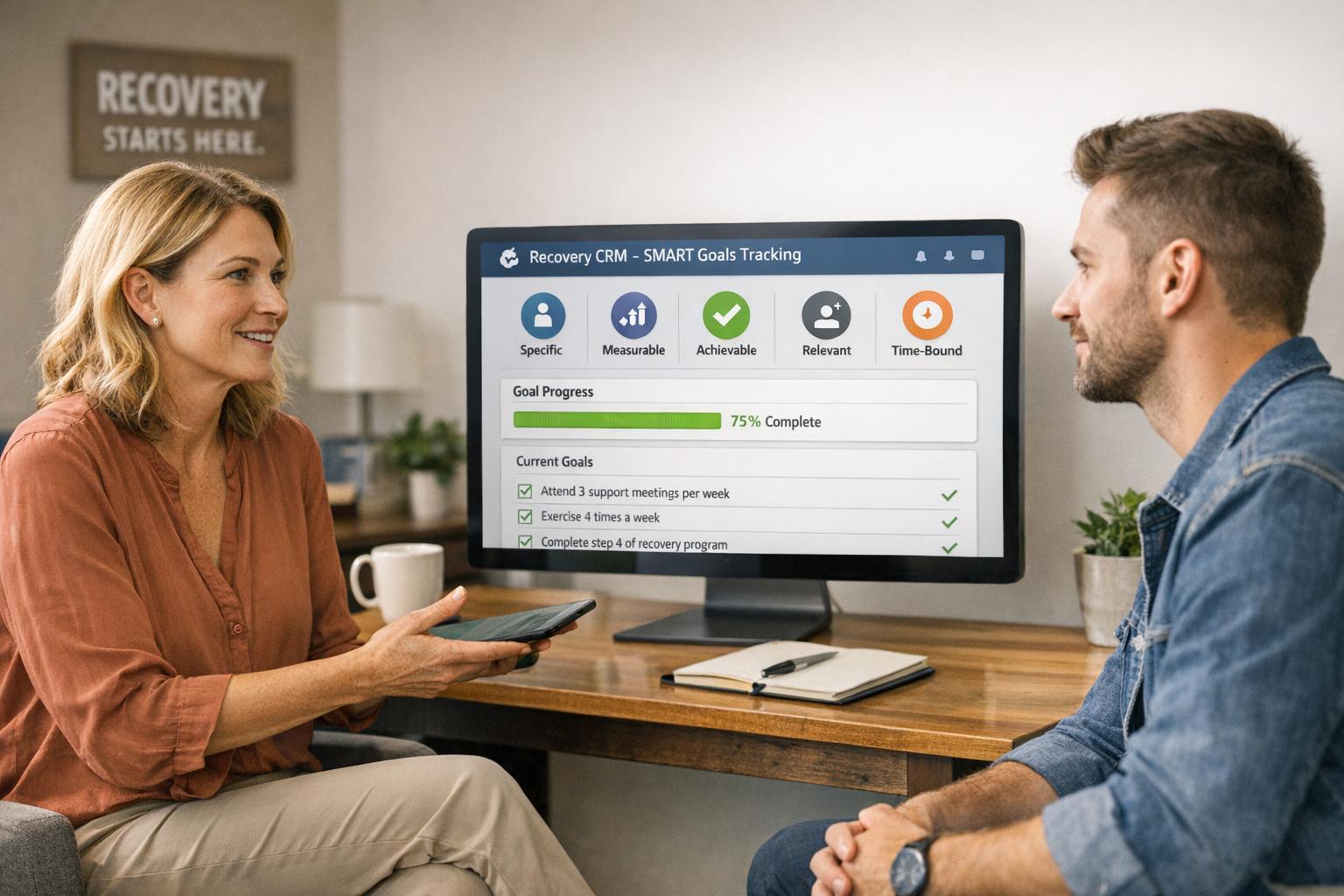
How Recovery CRMs Support SMART Goal Tracking
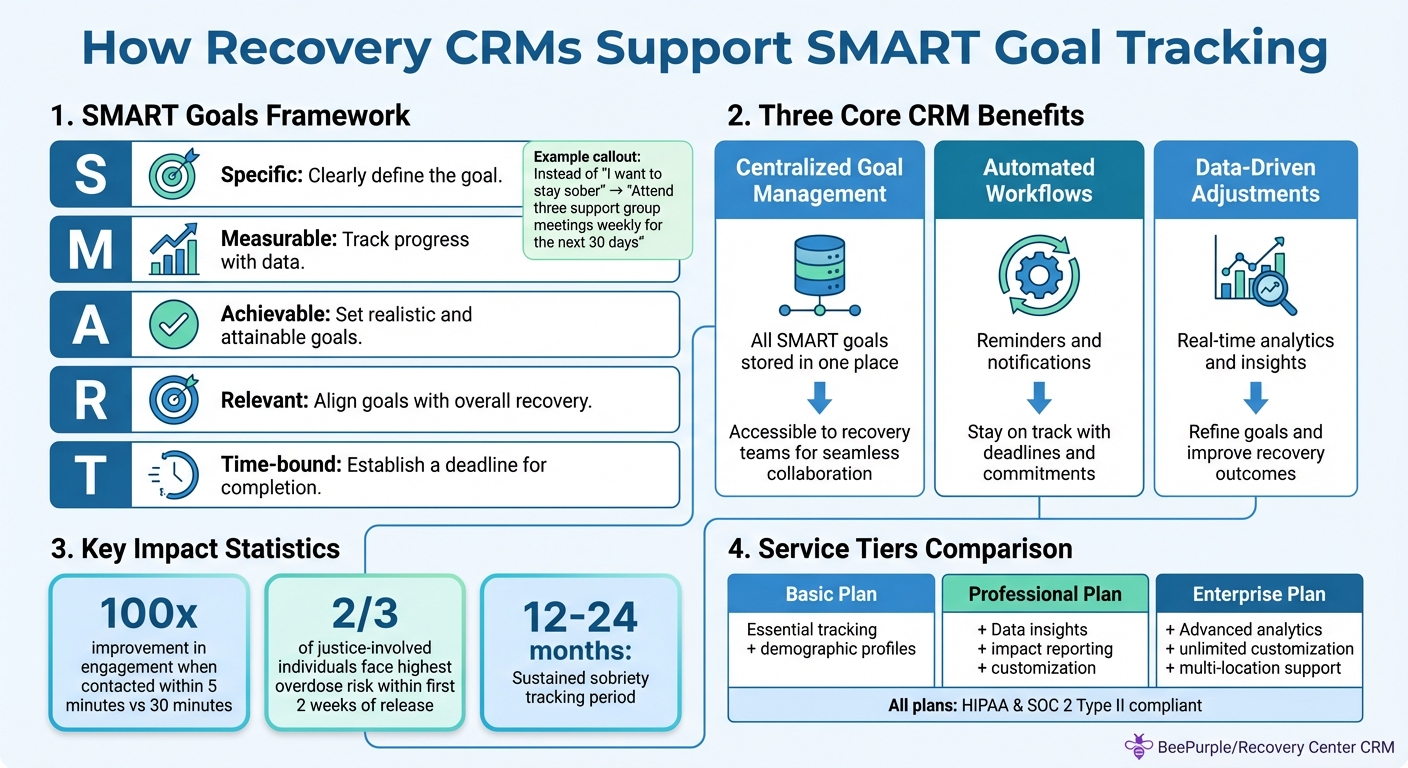
Recovery from substance use disorder thrives on structure and measurable progress. SMART goals - Specific, Measurable, Achievable, Relevant, and Time-bound - help turn broad aspirations like "staying sober" into actionable steps. For example, instead of saying, "I want to stay sober", a SMART goal could be: "Attend three support group meetings weekly for the next 30 days." Research shows this approach improves outcomes by providing clarity, focus, and motivation.
Recovery CRMs, like those offered by BeePurple, take this a step further. These tools digitize and centralize goal tracking, making it easier for recovery teams to monitor progress, adjust plans, and ensure accountability. Features like automated reminders, real-time dashboards, and data analytics streamline the recovery process, ensuring goals remain practical and achievable over time.
Key Benefits of Recovery CRMs:
- Centralized Goal Management: All SMART goals are stored in one place, accessible to recovery teams for seamless collaboration.
- Automated Workflows: Reminders and notifications help clients and professionals stay on track with deadlines and commitments.
- Data-Driven Adjustments: Analytics provide insights to refine goals and improve recovery outcomes based on real-time progress.
These platforms also support high-risk transitions, such as moving from incarceration to community-based recovery, by integrating court-mandated and personal goals into one system. They simplify reporting for compliance and funding purposes, making them a vital tool for recovery organizations aiming to deliver measurable results.
Recovery CRMs ensure that SMART goals are more than just a framework - they become a practical, actionable system that supports long-term recovery success.
How Recovery CRMs Support SMART Goal Tracking: A Visual Guide
Setting SMART Goals Quickstart Guide for Addiction Recovery
sbb-itb-ce23a48
How Recovery CRMs Support SMART Goal Tracking
Recovery Center CRM simplifies SMART goal management by digitizing and centralizing the entire process. It provides a single hub where case managers, peer support specialists, and healthcare providers can document goals, monitor progress, and make necessary adjustments. Instead of juggling spreadsheets or scattered notes, recovery professionals can view a complete, organized picture of each client’s SMART objectives within their profile. This streamlined system fosters collaboration between case managers and agencies, ensuring everyone stays aligned on measurable recovery outcomes.
Centralized Goal Management
With Recovery Center CRM, SMART goals are integrated directly into each client’s profile, serving as a unified source of information for all stakeholders. For example, case managers can set specific goals like "attend three peer support meetings per week for 30 days", ensuring the entire recovery team has access to the same details. This feature is especially critical during transitions from justice systems to community-based recovery, where courts, treatment providers, and recovery housing staff need synchronized access to plans while maintaining data security.
The platform also offers customizable fields, allowing recovery centers to adapt goal tracking to their specific needs. Whether tracking compliance with court-mandated requirements or voluntary wellness goals, teams can tailor SMART objectives to suit the unique circumstances of the individuals they serve.
Automated Workflows for Progress Monitoring
Once goals are centralized, Recovery Center CRM uses automation to ensure consistent follow-up. Automated reminders and check-ins help both professionals and clients stay on track with their SMART objectives. For instance, the system can send notifications about upcoming appointments or deadlines, reducing the likelihood of missed commitments and keeping engagement levels high. If a client commits to weekly therapy sessions for 90 days, the platform automatically tracks attendance and flags missed appointments for staff to address.
| Automated Workflow Feature | Effect on Recovery Outcomes |
|---|---|
| Automated Reminders | Minimizes missed appointments and keeps clients actively engaged in their recovery. |
| Milestone Tracking | Highlights progress, boosting motivation and psychological resilience. |
These automated tools align perfectly with the SMART framework by ensuring goals are time-sensitive and consistently monitored.
Data Insights for Goal Refinement
By combining centralized data with automated tracking, Recovery Center CRM offers powerful analytics to refine SMART goals as needed. The platform tracks patterns in attendance, engagement, and outcomes, helping teams identify when goals need to be adjusted. For example, if a client struggles to meet a goal, case managers can modify it to be more achievable or extend the timeline to better suit the individual’s current situation.
This data-driven approach ensures that goals remain practical and relevant throughout the recovery journey. Additionally, the platform’s analytics provide a broader view of which types of SMART goals yield the best outcomes, enabling recovery centers to fine-tune their programs for long-term success.
Setting Up SMART Goals in Recovery Center CRM
Recovery Center CRM brings a new level of precision to SMART goal setting. With its adaptable framework, professionals can create goals that cater to each individual's unique circumstances - whether those involve personal wellness milestones or court-mandated objectives. The process starts by defining specific parameters within a client’s profile, establishing a digital foundation for personalized goal tracking. Here’s how the platform makes customization possible.
Customizing SMART Goal Fields
Recovery Center CRM offers tools like custom fields, forms, and workflows that allow recovery programs to design SMART goals tailored to their specific requirements. For instance, case managers can set detailed objectives such as “attend two peer support meetings weekly for 90 days” or “maintain 24 hours substance-free, tracked daily.” These fields cover a range of recovery areas, including clinical progress, personal growth, support networks, and mental health.
"Using this platform, I have the complete profile of a person in recovery with all of our interactions in one place. The amount of time this saves us internally on streamlining administrative processes is huge because having that one centralized location with demographic information, the referrals we have made, etc., is so easy to understand and work with." - Justin, Recovery Professional
When setting up goals, recovery professionals can ensure specificity by defining clear parameters. Measurability comes into play with the system’s ability to track tangible metrics like hours, days, or weeks, making it simple to monitor progress, such as substance-free durations or therapy attendance. During intake, forms help confirm that goals are achievable by documenting available resources. Relevance is addressed by customizing fields to reflect each client’s unique challenges and triggers. Automated reminders add a time-sensitive element, ensuring deadlines for milestones, like securing stable housing within 90 days, are met. Beyond customization, including transitional objectives is vital for comprehensive recovery planning.
Integrating Goals with Justice-to-Community Transitions
For individuals transitioning from institutional care to community-based recovery, Recovery Center CRM plays a crucial role in managing these high-risk periods. Statistics show that nearly two-thirds of justice-involved individuals with substance use disorders face the greatest risk of overdose within the first two weeks of release. By incorporating the SMART framework, the platform ensures that both voluntary and mandated goals are aligned during these critical moments. It integrates court-ordered requirements - such as parole meetings, therapy sessions, and housing searches - directly into the goal-tracking system, ensuring consistent documentation and monitoring.
A powerful example comes from Healing Transitions' Rapid Responder Program in 2025. This program used Recovery Center CRM to manage outreach for individuals reentering the community after incarceration. By documenting client demographics, identifying health barriers, and scheduling follow-ups using daily EMS reports, the team could prioritize those with the highest needs. This structured approach built trust and provided personalized support during the transition. The system also tracked key life stability metrics - such as housing, employment, and financial health - on a quarterly basis, proving essential for long-term reentry success.
Tracking and Analyzing Goal Progress
Setting SMART goals is just the beginning. To make them truly effective, tracking progress and adjusting strategies based on real-time data is crucial. With the right tools, raw data transforms into actionable insights, enabling timely interventions and recognizing milestones along the way.
Using Dashboards for Real-Time Monitoring
The Recovery Center CRM dashboard consolidates data from various sources - standardized assessments, therapy notes, and behavioral observations - into a single, easy-to-digest view. For instance, when a client completes their weekly assessment, the scores immediately populate the dashboard. This allows clinicians to quickly identify any concerning trends before they escalate. The dashboard’s longitudinal tracking feature is especially useful, as it visualizes progress over weeks, months, or even years. This makes it easier to spot patterns in a client’s recovery journey.
For example, a case manager can see at a glance if a client’s attendance at peer support meetings has dropped or if their substance-free days are steadily increasing. This kind of immediate visibility is a game-changer. Studies show that contacting a lead within 5 minutes - versus 30 minutes - can improve the odds of successful engagement by 100 times. With dashboards that focus on five to seven key reports, teams can quickly interpret the data and take decisive action.
While real-time updates are invaluable for immediate decision-making, deeper analytics help uncover trends that are critical for long-term recovery.
Analytics for Long-Term Impact
Analytics go beyond tracking short-term milestones - they ensure that adjustments to SMART goals are grounded in data. The platform monitors key indicators such as sustained sobriety (12–24 months), life stability (tracked quarterly), and program engagement (measured monthly). These metrics not only reflect individual progress but also provide insight into the overall performance of recovery programs.
"In today's data-driven mental health landscape, dashboards are no longer optional; they're essential for proving treatment effectiveness and ensuring consistent, evidence-based care." - Ganesh Varahade, Founder & CEO of Thinkitive Technologies
This aligns with the growing trend toward measurement-based care, where proving treatment effectiveness is often required for insurance reimbursement. By analyzing recovery metrics across different client groups, recovery centers can refine their strategies and demonstrate their value to funders and state agencies. The platform also supports ongoing monitoring through scheduled alumni check-ins, helping to identify potential relapses early.
To complement these robust analytical tools, Recovery Center CRM offers flexible service plans tailored to the needs of different organizations.
Comparing Features Across Plans
Recovery Center CRM provides three service tiers, each designed to address specific organizational requirements:
- Basic Plan: Ideal for smaller programs, this plan includes essential tools for tracking recovery journeys and demographic profiles. Reporting features are limited, and customization options are minimal.
- Professional Plan: Building on the Basic Plan, this option includes data insights, impact reporting, and customizable fields, making it a strong choice for mid-sized programs seeking more detailed analytics.
- Enterprise Plan: Designed for large-scale recovery centers and state-wide initiatives, this plan offers advanced analytics, unlimited customization, and tools to manage thousands of clients across multiple locations.
All service tiers adhere to stringent HIPAA and SOC 2 Type II compliance standards, ensuring the protection of sensitive substance use disorder records. Features like role-based access controls and comprehensive audit trails safeguard client data. Additionally, mobile accessibility across all plans empowers recovery coaches and case managers to access client information in real time during home visits or community outreach efforts.
Generating Impact Reports and Refining SMART Goals
After gathering real-time data through monitoring and analytics, Recovery Center CRM transforms this information into actionable reports. These impact reports showcase program success to agencies, funders, and accreditors by turning raw dashboard metrics into clear evidence.
Creating State-Level Impact Reports
With its custom reporting tools, the platform compiles key metrics like admissions, demographics, occupancy rates, and overall impact. These insights are critical for meeting compliance standards and securing state funding. Since 2018, the Joint Commission has mandated that all accredited behavioral health providers use standardized tools for tracking outcomes. This makes automated reporting not just helpful, but essential.
"Impact Reporting: Create custom reports to track and analyze program impact, admissions, demographics, and occupancy rates. This data can be crucial for securing future funding." – Bee Purple
A great example of this is Healing Transitions' Rapid Responder Program, which uses Recovery Center CRM to organize follow-ups based on daily EMS reports. By consolidating client data into one streamlined system, the program eliminates the need for manual data collection and removes inefficiencies caused by scattered information.
State health departments can also benefit from these aggregated reports, using them to highlight how public funding is making a difference. Unlike outdated methods like spreadsheets or paper records, the platform can track outcomes for thousands of clients at once, making it easier to identify trends at a population level. These insights allow for continuous monitoring, which plays a key role in refining SMART goals.
Continuous Monitoring and Goal Adjustment
Tracking alumni progress at 1, 3, 6, 9, and 12 months after discharge provides the long-term data needed to fine-tune SMART goals. This ongoing data collection not only strengthens community ties with clients but also generates the insights needed to adjust goals effectively.
Automation takes the hassle out of follow-ups, replacing the time-consuming manual outreach that often requires 10 to 15 contact attempts just to gather a single data point. With Recovery Center CRM, follow-up reminders and outreach logs are automated, saving time and improving accuracy. If alumni check-ins reveal trends like declining engagement or missed appointments, case managers can intervene early, adjusting SMART goals to address potential challenges before they escalate.
For instance, if quarterly reports show that clients transitioning from incarceration struggle with housing stability at the six-month mark, programs can adapt their SMART goals to include more frequent housing support check-ins during that critical period. This data-driven approach ensures goals remain relevant and effective. Additionally, role-based access controls enable secure data sharing between agencies - such as courts, health departments, and housing providers - while maintaining strict compliance with HIPAA and SOC 2 Type II standards. This feedback loop reinforces the SMART framework, ensuring it evolves alongside the recovery journey.
Conclusion: Using Recovery CRMs for SMART Goal Success
Recovery Center CRM offers a solid framework to help achieve SMART goals effectively. By turning broad objectives into measurable milestones, the platform simplifies goal management. It tracks progress with clear metrics, breaks goals into actionable steps, and schedules timely follow-ups to keep everything on track. This structured method ensures every goal supports both personal recovery journeys and organizational compliance needs.
The centralized data system addresses inefficiencies caused by scattered spreadsheets and manual processes. With HIPAA and SOC 2 Type II compliance, the platform ensures secure information sharing across state health departments, justice systems, and recovery housing providers. This secure foundation not only supports individual recovery but also informs broader public health strategies.
"The ability to generate reports allows for informed decision-making, continuously improving policies and procedures. The system organizes and prioritizes follow-up attempts, ensuring those with the highest need receive the most attention." – Bee Purple
In addition to its data management strengths, the platform excels in communication. Automated workflows and secure messaging keep communication consistent, allowing staff to focus more on client care.
For organizations aiming to deliver evidence-based recovery outcomes, Recovery Center CRM provides the tools to track meaningful metrics, adapt goals based on real-world data, and showcase results to funders and accreditors. By combining automation, compliance, and analytics, it creates a sustainable system for achieving SMART goals. This integrated approach not only advances individual recovery but also supports broader public health initiatives.
FAQs
How do Recovery CRMs help track and achieve SMART goals in addiction recovery?
Recovery CRMs, like BeePurple's Recovery Center CRM, are essential tools in addiction recovery programs, helping track and achieve SMART (Specific, Measurable, Achievable, Relevant, Time-bound) goals. These platforms bring all client data into one place, streamline follow-ups, and make it easier to monitor progress. This ensures both providers and individuals stay on the same page when it comes to hitting recovery milestones.
By honing in on measurable and time-sensitive aspects, Recovery CRMs track crucial metrics such as sobriety length, completed therapy sessions, and participation in support activities. With automated workflows and analytics, providers gain insights that allow them to fine-tune strategies and set realistic next steps. This organized, data-focused method makes recovery goals clearer and more tailored to each individual, boosting progress and encouraging long-term success.
How do Recovery CRMs help track and adjust SMART goals in addiction recovery programs?
Recovery CRMs make it easier to track and refine SMART goals by offering tools that monitor progress. Features like sobriety day tracking, milestone achievements, and relapse patterns help ensure that goals are both measurable and tailored to each individual’s recovery path.
These platforms also enhance goal relevance and timeliness with tools like appointment scheduling, reminders, and real-time updates. With customizable reporting, recovery centers can analyze data and adjust goals to keep them specific, achievable, and aligned with personal needs.
On top of that, automated communication workflows and analytics ensure consistent support. This allows recovery teams to focus on providing care while the CRM handles tasks like maintaining data accuracy and compliance. The result is a well-organized, data-driven strategy for supporting long-term recovery.
How do Recovery CRMs support the transition from incarceration to community-based recovery?
Recovery CRMs simplify the process of moving from incarceration to community-based recovery by organizing all client data in a single, secure platform. This setup helps recovery teams monitor progress, coordinate care efforts, and maintain consistent follow-up communication - key elements for a successful reintegration journey.
By automating repetitive tasks and offering real-time data insights, these systems free up professionals to concentrate on providing tailored support. At the same time, they ensure compliance is met and promote better long-term results. The result? A smoother path for individuals to rebuild their lives within their communities.